

Toll Free: 1800 3000 6222
Telephone: +91 141 222 3221
Fax: +91 141 222 1926, 222 2259
CIN: U29130WB1946PLC013643
Founded in 1946, National Engineering Industries Ltd (NEI) is India’s leading bearings manufacturer and exporter, renowned for excellence in quality and delivery.

Choosing the right Recycling Baler Machine in 2026 requires more than comparing price tags and advertised pressure.
Global buyers need equipment that matches their materials, labor conditions, energy supply, and recycling targets. A reliable baler should compress cardboard, plastics, textiles, or metal according to its tested design. Bale density matters. So does consistency.
This guide examines practical performance indicators, including hydraulic power, chamber size, cycle time, wire or strap systems, safety controls, and maintenance access. It also considers container loading, installation support, spare parts, and operator training. A machine producing dense 500-kilogram cardboard bales may reduce transport costs, but it could be unsuitable for a small warehouse with limited floor space. Fit matters more than impressive numbers.
Look closely at evidence.
Manufacturers should provide clear specifications, test records, warranty terms, and realistic production rates. Independent inspection can reveal details that brochures often miss, such as oil leakage, uneven bale shapes, or difficult door movement. These small problems become expensive when equipment runs every day. Buyers should also verify electrical compatibility, regional safety requirements, and service availability before signing a contract.
No single model is best for every country or material stream. That is an important limitation. A powerful machine may consume more energy than expected, while a compact model may require frequent loading. The best choice balances throughput, durability, compliance, operator safety, and long-term operating cost. This 2026 comparison aims to help buyers ask sharper questions and choose with evidence, not marketing language.
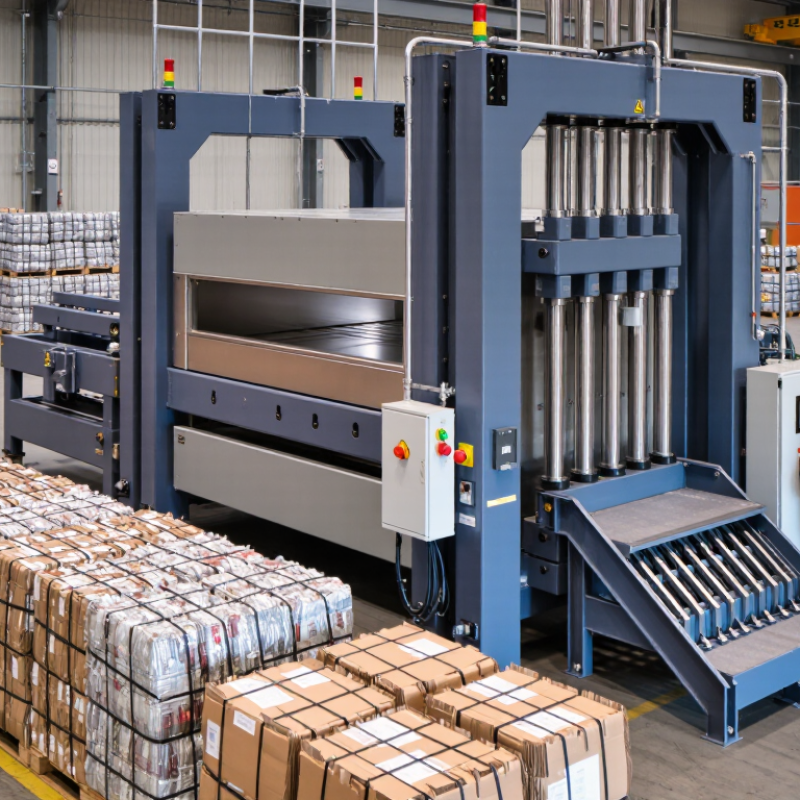
A recycling baler machine compresses loose recyclable materials into dense, manageable bales. It commonly handles cardboard, paper, plastic film, textile waste, and certain metal containers. The machine reduces storage volume and makes internal handling more efficient. It also helps buyers estimate transport capacity more accurately.
The working process is straightforward. Workers place sorted material into a feeding chamber. A hydraulic ram then presses the material against a reinforced platen. Pressure removes trapped air and forms a compact block. When the bale reaches the selected size, operators secure it with approved wire, strap, or binding material. The finished bale is then ejected for weighing, storage, or shipment.
Safety controls matter greatly. Door interlocks, emergency stops, pressure protection, and clear operating instructions reduce avoidable risks. Moisture, contamination, and uneven feeding can lower bale quality. A machine rated for heavy cardboard may perform poorly with thin plastic film. This is often overlooked.
For global buyers in 2026, capacity should not be the only concern. Check motor power, chamber dimensions, cycle time, voltage compatibility, spare-part access, and service support. A larger ram sounds better, but it can increase energy use and maintenance demands. In real facilities, simple controls sometimes outperform complicated systems. The “best” baler depends on material, labor, floor space, and daily volume. Getting this choice perfect is difficult. Careful testing remains wiser than relying on a catalog figure.
| Baler Type | Typical Recyclable Materials | Typical Bale Density | Typical Bale Weight | Typical Throughput | Common Power Range | Recommended Application |
|---|---|---|---|---|---|---|
| Vertical Baler | Cardboard, paper, plastic film, textile waste | 80–250 kg/m³ | 40–500 kg | 1–8 t/h | 4–30 kW | Retail stores, warehouses, offices, and small recycling stations |
| Horizontal Closed-End Baler | OCC cardboard, mixed paper, PET bottles, HDPE containers | 250–450 kg/m³ | 300–800 kg | 5–15 t/h | 30–90 kW | Medium-sized material recovery facilities and distribution centers |
| Horizontal Open-End Baler | Cardboard, paper, plastics, agricultural film, textile fiber | 300–550 kg/m³ | 400–1,000 kg | 8–25 t/h | 45–150 kW | High-volume recycling facilities requiring continuous feeding |
| Two-Ram Baler | Mixed recyclables, OCC, PET, aluminum cans, rigid plastics | 350–650 kg/m³ | 450–1,200 kg | 15–40 t/h | 75–250 kW | Large-scale facilities handling several material streams |
| Metal Baler | Steel cans, aluminum scrap, copper wire, light-gauge metal | 500–1,200 kg/m³ | 30–500 kg | 1–12 t/h | 30–160 kW | Scrap yards, metal processors, and manufacturing plants |
| Hay and Biomass Baler | Straw, hay, corn stalks, cotton residue, selected biomass fibers | 100–250 kg/m³ | 15–500 kg | 2–20 t/h | 15–100 kW | Agricultural operations and biomass storage facilities |
| Step | Operating Stage | What Happens | Important Control Point |
|---|---|---|---|
| 1 | Feeding | Loose recyclable materials enter the feed hopper, conveyor, or chamber. | Remove oversized, hazardous, and unsuitable items before compression. |
| 2 | Compaction | A hydraulic ram moves through the chamber and compresses the material. | Pressure, ram force, and cycle time determine bale density and output. |
| 3 | Tying or Binding | Wire, plastic strapping, or tying systems secure the compressed bale. | The binding method should match the material, bale weight, and transport requirements. |
| 4 | Ejection | The finished bale is pushed or ejected from the chamber for handling. | Allow sufficient clearance and use suitable lifting equipment. |
| 5 | Storage and Transport | Bales are stacked, weighed, stored, and transported to a recycling processor. | Keep paper and other moisture-sensitive materials dry and stable. |
| Selection Dimension | Practical Requirement | Why It Matters |
|---|---|---|
| Material Type | Confirm the material’s moisture level, bulk density, size, and contamination rate. | Different materials require different chamber sizes, pressure levels, and binding methods. |
| Required Capacity | Select a rated capacity above the average incoming volume to handle peak loads. | Undersized equipment can create bottlenecks and excessive operating cycles. |
| Bale Specification | Match bale dimensions and weight with warehouse space, trucks, containers, and downstream buyers. | Standardized bales improve stacking efficiency and reduce logistics costs. |
| Electrical System | Verify voltage, frequency, phase, motor rating, and control-panel requirements. | Electrical compatibility is essential for safe installation and reliable operation. |
| Safety Features | Look for emergency stops, interlocked doors, overload protection, and guarded moving parts. | Safety systems help protect operators and support compliance with local regulations. |
| Installation and Service | Plan for foundation, access space, operator training, spare parts, and preventive maintenance. | Proper installation and maintenance help extend service life and reduce downtime. |
Note: Capacity, bale density, bale weight, power, and throughput are typical industry ranges. Actual performance depends on material composition, moisture content, feeding method, machine configuration, and operating conditions.
Recycling balers differ by material, moisture, and required bale density. Choosing only by price can create unstable bales and higher maintenance costs. Vertical balers suit small warehouses, retail stores, and limited floor areas. They handle cardboard and light plastic film with simple loading routines. Horizontal balers process larger volumes and reduce manual handling. They are practical for distribution centers and municipal sorting sites. Check the feed opening carefully. Oversized cartons can cause repeated jams.
Cardboard needs strong compression, but excessive force can crush wet fibers. A horizontal baler with automatic tying often improves throughput for clean, dry OCC. Paper grades may need adjustable pressure because mixed paper expands after tying. Plastic film requires a chamber that controls springback. Otherwise, loose edges can make storage unsafe. Textile recycling usually benefits from lower-speed compression and careful bale shaping. Fabric can wrap around moving parts. Regular inspection matters.
Metal cans and light scrap require specialized shear or high-force balers. These machines need reinforced chambers and strict operator controls. Do not use a standard paper baler for dense metal loads. I have seen buyers underestimate moisture, contamination, and daily volume. That mistake can outweigh the machine’s purchase price. A perfect bale is not always necessary. Consistent weight, secure ties, and safe handling are often more valuable. Verify electrical requirements, guarding, emergency stops, spare-part access, and local compliance before ordering. Supplier testing with your actual material remains the most reliable evaluation.
Choosing the best recycling baler machine in 2026 starts with your actual material, not a glossy specification sheet. Cardboard, plastic film, textiles, and metal require different chamber designs and pressure levels. A powerful machine may perform poorly with light, uneven feedstock. Measure daily volume, moisture, bale size, and available floor space before comparing models.
Check throughput under realistic working conditions. Ask for tested cycle times, not only maximum figures. The machine should produce dense, stable bales that forklifts can move safely. Automatic tying can reduce labor, but it also adds maintenance points. Inspect wire or strap access, chamber clearance, emergency stops, guarding, and noise levels. Safety documentation and recognized compliance certificates should be available and easy to verify.
Energy use matters during long shifts. Look for efficient hydraulic systems, accessible filters, and clear maintenance schedules. Remote monitoring may help identify pressure changes, but it cannot replace trained inspections. Request a material trial using your own feedstock. That step often exposes dust problems, feeding delays, or weak bale shapes. I would not choose the highest pressure automatically. It can increase purchase cost and stress components unnecessarily. A lower-capacity machine may also become a bottleneck when volumes grow. Compare warranty coverage, spare-part availability, technician response times, and operator training in your region. Some purchasing decisions still rely too heavily on price. That is a costly shortcut.
For global buyers, the best recycling baler machine in 2026 is not simply the fastest model.
Comparison should begin with the material. Cardboard, plastic film, textiles, and mixed paper require different pressing forces. Check bale density, chamber size, feed opening, and hourly throughput. A wider opening may reduce feeding time, but it can also demand more floor space. Measure the loading area carefully.
Power compatibility matters. Confirm voltage, frequency, motor rating, and plug requirements before purchase.
Automatic wire or strap systems can improve output, yet they may increase maintenance needs. Ask for documented cycle times under real operating conditions, not only laboratory figures. Safety guards, emergency stops, interlocks, and clear operating instructions deserve close attention. Small details prevent expensive downtime.
Service support can decide the real machine cost.
Compare spare-parts availability, remote diagnostics, installation guidance, and technician response times across regions. Request a written warranty with clear exclusions. A low purchase price may hide costly shipping or specialized maintenance.
I have seen buyers focus on motor power and overlook bale handling equipment. That was a costly mistake. Also question impressive capacity claims; wet or uneven material often performs differently. Review test-bale data, energy use, and operator feedback before making a final comparison.
Selecting a recycling baler in 2026 requires more than comparing pressure and price. Installation begins with a level, reinforced floor, adequate clearance, and verified electrical supply. Keep the loading area dry and free from loose straps, wire, and oil. A qualified technician should inspect guards, emergency stops, interlocks, and hydraulic connections before commissioning. Record machine settings and test an empty cycle first. This small step often reveals vibration or unusual noise. Do not rush it. A perfect setup is unlikely, especially in older workshops.
Operators need practical training, not only a manual signature. Sort accepted recyclable material before loading, and distribute it evenly inside the chamber. Never place hands or tools into moving parts. Use lockout and tagout procedures before clearing jams or entering danger zones. Watch bale density, cycle time, pressure, and motor temperature during production. Stop immediately if the ram hesitates, oil leaks, or the bale wire shifts. Short pauses help. They also expose habits that written procedures may overlook.
Daily checks should include hoses, seals, bolts, guards, sensors, and emergency controls. Clean dust from ventilation openings and remove residue around the chamber. Follow the maintenance schedule for hydraulic fluid, filters, lubrication, and calibration. Keep inspection records with dates, readings, and corrective actions. Replace damaged safety components; temporary repairs create false confidence. PPE should match the task, including eye protection, suitable gloves, hearing protection, and safety footwear. Requirements vary by location, so confirm local electrical, occupational, and waste-handling rules with competent professionals. Review the procedure after every incident or near miss. That reflection matters.
This chart converts common maintenance intervals into an annual planning frequency: daily checks equal 365 per year, weekly checks equal 52 per year, and monthly checks equal 12 per year. Operators should inspect guards and emergency stops before each shift, check hydraulic hoses and lubrication points weekly, and inspect electrical connections monthly. Always confirm the final schedule against the machine manufacturer’s manual and local safety regulations.
Copyright © 2023 NEI Ltd. All rights reserved.
Registered Office : 9/1, R. N. Mukherjee Road, Kolkata – 700 001. In case of any queries or grievances, please contact Mr.Tarun Kumar Kabra, Company Secretary.
E-mail: sale@kinpart.com Privacy Policy Cookie Policy