

Choosing the 2026 Best Polymer Surge Arrester Manufacturers requires more than comparing product brochures. A reliable evaluation examines design quality, testing discipline, manufacturing experience, and support after delivery. This guide introduces manufacturers that demonstrate consistent performance in demanding electrical networks. It focuses on Polymer Surge Arrester solutions for substations, distribution lines, transformers, and industrial facilities.
Real experience matters. Engineers often inspect housing condition, sealing quality, connection hardware, and leakage-current behavior before approval. A well-made arrester should withstand moisture, pollution, vibration, and repeated surge events. Laboratory evidence also deserves close attention. Type-test reports, thermal stability results, aging data, and compliance with recognized standards can reveal how seriously a manufacturer manages risk. Details matter.
Small details matter.
This overview also considers production capacity, quality control, customization, delivery reliability, and technical communication. A manufacturer may offer impressive electrical ratings but provide weak documentation or slow field support. That weakness can become expensive during installation or maintenance. No ranking is flawless. Market information changes, and regional performance may differ from public claims. Therefore, buyers should verify current certificates, factory capabilities, warranty terms, and project references independently. The strongest suppliers combine tested materials, disciplined processes, transparent records, and practical engineering support. They do not simply sell an arrester. They help customers reduce outage risks and protect valuable equipment over years of service.
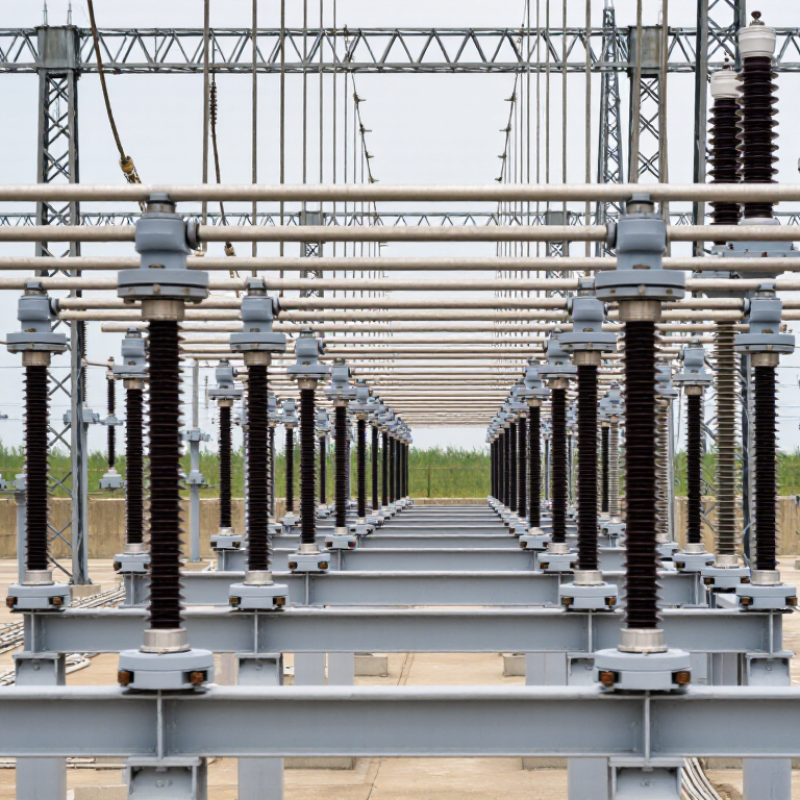
Polymer surge arresters protect electrical equipment from sudden overvoltage caused by lightning or switching events. Their outer housing uses weather-resistant polymer, which is lighter and less fragile than traditional porcelain. Inside, metal-oxide varistor blocks provide the main protection. Under normal voltage, these blocks allow only tiny leakage current. During a surge, their resistance drops sharply, directing harmful energy safely toward ground.
The arrester does not stop a surge completely. It limits the voltage to a safer level for transformers, cables, and switchgear. Reliable grounding is essential; poor connections can leave dangerous voltage across the equipment. Field inspections often find loose terminals, damaged polymer sheds, or contamination near the base. These small details matter. A unit may look healthy but still perform poorly after repeated surges or moisture exposure.
Tips: Select the rated voltage carefully for the system. Check grounding resistance during maintenance. Keep the arrester close to the protected equipment. Inspect for cracks, tracking marks, swelling, and unusual leakage current. No checklist is perfect. Site pollution, altitude, and installation spacing can change performance, so manufacturers’ technical data and qualified electrical testing should guide the final decision.
Technical comparison and manufacturer-selection reference for polymer-housed metal-oxide surge arresters
| Evaluation Dimension | Typical Technical Data | How It Works or Why It Matters | Manufacturer Selection Checkpoint |
|---|---|---|---|
| Product Type | Gapless polymer-housed metal-oxide surge arrester | A sealed arrester uses nonlinear zinc-oxide varistor blocks rather than a series spark gap. | Confirm that the proposed design is suitable for the system voltage, grounding arrangement, and installation location. |
| Main Active Element | Zinc-oxide (ZnO) metal-oxide varistor blocks | The blocks have high resistance at normal voltage and become highly conductive during a surge, diverting current to earth. | Request routine and type-test evidence covering electrical performance, thermal stability, and energy capability. |
| Housing Material | Commonly silicone rubber; some designs use other outdoor polymeric materials | The polymer housing provides insulation, weather resistance, and protection against moisture ingress. | Evaluate hydrophobicity, UV resistance, tracking and erosion performance, sealing method, and long-term outdoor aging data. |
| Common Voltage Range | Distribution units commonly cover systems from approximately 1 kV to 36 kV; transmission designs extend considerably higher. | The arrester must withstand continuous system voltage while limiting temporary overvoltages and transient surges. | Check rated voltage, maximum continuous operating voltage (MCOV), temporary overvoltage withstand, and phase-to-ground conditions. |
| MCOV Selection | MCOV is selected above the highest expected continuous phase-to-ground operating voltage. | Correct MCOV prevents excessive continuous leakage current and thermal stress during normal operation. | Require a calculation based on maximum system voltage, grounding method, neutral displacement, and expected temporary overvoltages. |
| Nominal Discharge Current | Distribution arresters frequently use 5 kA or 10 kA nominal discharge-current classes; higher classes are used where required by the application. | Nominal discharge current is a standardized test current used to characterize protective behavior; it is not the only measure of surge capability. | Compare line-discharge class, high-current withstand, switching-surge energy, and application-specific duty requirements. |
| Residual Voltage | Specified at defined impulse currents, commonly including steep-front, lightning, and switching impulses. | Lower residual voltage generally provides better protection, provided the arrester remains stable at the operating voltage. | Compare protective levels with the insulation withstand level of transformers, cables, switchgear, and other connected equipment. |
| Response Behavior | Voltage limiting begins rapidly as the ZnO blocks move from their high-resistance region into nonlinear conduction. | The arrester conducts surge current to ground and returns to a low-current state after the transient ends. | Review voltage-current characteristics, response data, and coordination calculations for the complete protection system. |
| Failure Protection | Depending on the design, features may include pressure-relief venting, disconnectors, fault indicators, and controlled failure paths. | These features help limit equipment damage and indicate an arrester that has reached the end of its service life. | Verify mechanical coordination, short-circuit behavior, disconnector operation, and safe failure-mode test results. |
| Applicable Standards | IEC 60099-4 is widely used for metal-oxide surge arresters; IEEE and regional standards may also apply. | Standards define classifications, test procedures, ratings, protective characteristics, and documentation requirements. | Check the exact edition, test reports from qualified laboratories, production traceability, and conformity documentation. |
| Outdoor Environmental Performance | Important factors include pollution level, altitude, humidity, salt exposure, temperature, wind, and solar radiation. | Environmental stress can increase surface leakage, accelerate aging, and reduce insulation reliability. | Select appropriate creepage distance, housing profile, altitude correction, pollution class, and climate qualification. |
| Mechanical and Installation Data | Key data includes cantilever strength, terminal type, mounting arrangement, creepage distance, clearances, and total height. | Correct mechanical design ensures secure installation and adequate insulation coordination in the available space. | Confirm interface dimensions, conductor compatibility, torque requirements, mounting orientation, and site clearances. |
| Quality and Traceability | Relevant controls include incoming-material inspection, varistor-block testing, sealing inspection, routine tests, and serial-number tracking. | Consistent manufacturing reduces variation in leakage current, protective level, sealing quality, and thermal stability. | Request quality plans, routine-test records, calibration evidence, inspection procedures, and warranty or service terms. |
| Best-Fit Application | Overhead distribution lines, substations, transformers, cables, switchgear, renewable-energy collectors, and industrial networks. | Polymer arresters are valued for low weight, compact installation, strong contamination performance, and reduced shattering risk compared with porcelain housings. | Choose by system study and equipment coordination rather than by nominal voltage or purchase price alone. |