

Toll Free: 1800 3000 6222
Telephone: +91 141 222 3221
Fax: +91 141 222 1926, 222 2259
CIN: U29130WB1946PLC013643
Founded in 1946, National Engineering Industries Ltd (NEI) is India’s leading bearings manufacturer and exporter, renowned for excellence in quality and delivery.

Choosing a Tcp Perforating Gun in 2026 is a well-design decision, not a catalog comparison. The gun must fit the completion, conveyance method, reservoir objectives, and operating limits. A poor match can compromise shot placement or create avoidable operational challenges. Small details matter: casing clearance, tubing dimensions, pressure ratings, temperature exposure, charge design, and debris management.
The wider market makes disciplined planning more important. The International Energy Agency’s Oil 2024 report projected global oil demand would rise by 3.2 million barrels per day between 2023 and 2030, reaching 105.4 million barrels per day. That forecast is not a perforating forecast. It does, however, underline the need to evaluate well interventions against changing production requirements and project economics. For technical verification, API Recommended Practice 19B provides standardized procedures for evaluating perforating-system performance. Operators should review relevant test evidence alongside well-specific engineering data, rather than treating a product specification as proof of field performance.
No single gun fits every well. A practical selection process compares gun diameter, shot density, phasing, charge performance, conveyance constraints, and expected downhole conditions. It also checks compatibility with the completion and the planned firing sequence. In my experience, a clean comparison table catches mismatches early. Yet the available data may not capture every real-world variable; that limitation deserves attention. This guide outlines the questions that help teams choose a TCP system with clearer assumptions, stronger evidence, and fewer surprises.
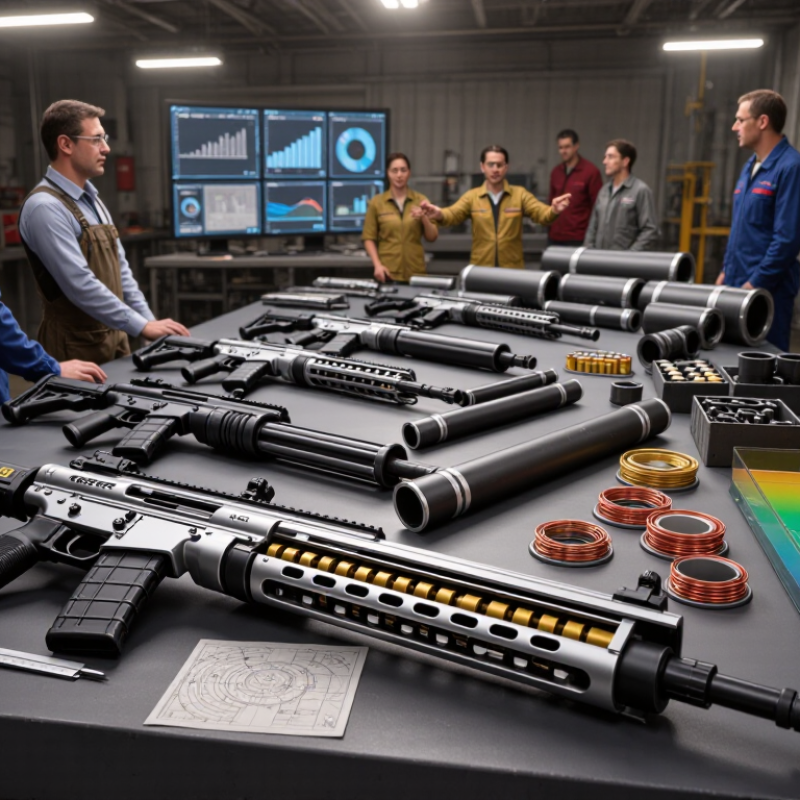
TCP perforating guns are lowered on the production or work string, rather than run on wireline. This lets crews position guns across long intervals and perforate in deviated wells where wireline access may be difficult. The string also gives operators control over pressure conditions during firing. Fit matters. Gun diameter, shot density, phasing, and charge performance must suit casing size, cement, formation strength, and the completion plan. API Recommended Practice 19B describes standardized methods for evaluating perforator performance in target materials. Those tests inform selection, but they cannot reproduce every downhole condition.
In 2026, choosing a TCP system means balancing penetration, hole size, debris, and operational risk—not simply maximizing explosive output. A practical review checks the well schematic, expected temperature and pressure, tubing limits, and how the guns will be recovered or left in place. Small details count. A poor clearance estimate can complicate deployment; an unsuitable shot pattern can undermine the completion objective. The IEA’s Oil 2024 report projected global oil demand at 105.4 million barrels per day by 2030, underscoring continued attention to reliable production. That forecast is context, not a gun-design rule. Field records and well-specific engineering should carry more weight. I would still question any selection based on a single lab result.
Before selecting a TCP perforating gun, define what the well must achieve. Is the priority broad reservoir access, selective interval coverage, or reliable initiation across a long completion? Record target depth, casing and tubing dimensions, expected pressure, temperature, and fluid conditions. Small differences matter. An estimate from an old report may not reflect current well conditions.
Match the gun configuration to the completion and operating window, not simply to a preferred shot density. Review conveyance limits, available clearance, required penetration, and the planned firing sequence with qualified completion personnel. Check the assumptions against current data, including the well schematic and relevant cement evaluation. A neat spreadsheet can still hide an outdated measurement. That is easy to overlook.
Consider what happens after perforating. A stimulation plan may favor consistent entry points, while a production interval may require careful control of which zones communicate. State uncertainties and contingency limits before selection. Downhole conditions rarely match every model perfectly. If measurements, pressure trends, or completion details conflict, revisit the design and document why it changed.
| Decision Dimension | Information to Define | How It Guides TCP Gun Selection | Checks Before Finalizing |
|---|---|---|---|
| Well objective | Identify whether the job is for production, injection, testing, stimulation, or selective access to one or more intervals. | Sets the required interval coverage, shot distribution, selectivity, and whether multiple gun sections or staged operations are appropriate. | Confirm target zones, planned sequence, isolation requirements, and the completion design with the subsurface and well engineering teams. |
| Target interval and formation | Record interval tops and bases, formation type, expected heterogeneity, and available formation-strength or rock-mechanics data. | Influences perforation placement and the choice of charge performance characteristics. Formation and completion conditions affect actual penetration and hole quality. | Use representative formation and completion data where available; do not treat published or laboratory charge performance as a guaranteed downhole result. |
| Casing, liner, and completion geometry | Specify casing or liner size, weight, grade, wall thickness, connection details, tubing dimensions, and internal restrictions. | Determines the allowable gun outside diameter, clearance, conveyance arrangement, and whether the selected system can pass through the completion. | Check the latest well schematic, drift restrictions, nipples, safety valves, packers, and any changes made after the schematic was issued. |
| Gun size and configuration | Define the available internal clearance, desired shot density, gun length, and required coverage across the target interval. | Gun diameter, carrier design, charge size, phasing, and shot density must be considered together; increasing one design feature may constrain another. | Verify dimensions and performance against the specific gun-and-charge configuration, casing geometry, and operating conditions—not nominal size alone. |
| Well trajectory and conveyance | Provide measured depth, inclination, azimuth, dogleg severity, and expected friction or conveyance limits. | Helps determine whether tubing-conveyed deployment is suitable and whether the assembly can reach, correlate, and remain positioned at the target. | Review torque-and-drag or conveyance analysis as applicable, toolstring length, deviation survey quality, and contingency plans for movement or retrieval. |
| Pressure and temperature | Define expected downhole pressure and temperature during run-in, firing, and retrieval, including credible transient conditions. | Every gun, initiator, seal, and associated component must be qualified for the anticipated environment and the selected operating sequence. | Compare the complete system’s rated limits with the well program and operating envelope; account for uncertainty and applicable qualification requirements. |
| Wellbore fluids and environment | Document fluid type, density, solids, gas content, corrosive species, and expected fluid-level conditions. | Fluid conditions affect hydrostatic pressure, corrosion exposure, debris risk, and the pressure differential across the perforations. | Confirm fluid compatibility for exposed components and review well-control, displacement, and fluid-handling procedures. |
| Pressure condition at firing | Define the planned pressure relationship between the wellbore and formation at the time of perforating. | Underbalanced, balanced, or overbalanced conditions can produce different cleanup and formation-damage outcomes. The appropriate condition is reservoir- and operation-specific. | Set the pressure target through reservoir, completion, and well-control analysis. Do not apply a universal underbalance value to all wells. |
| Shot phasing and orientation | Specify the desired angular distribution of shots and any orientation requirements imposed by the completion or well objective. | Phasing affects the circumferential distribution of perforations and should be assessed alongside casing clearance, shot density, and the intended flow paths. | Check the selected configuration against completion restrictions, formation objectives, and any required correlation or orientation method. |
| Selective firing and interval control | Identify whether separate zones must be fired independently, in a planned sequence, or with selective isolation between intervals. | May require a suitable firing-system architecture, compartmentalized gun sections, and compatible isolation or sequencing equipment. | Review the firing sequence, barriers, arming and disarming procedures, and contingencies for misfire or incomplete firing. |
| Well-control and operational safety | Define pressure-control equipment, barrier status, operating limits, exclusion zones, and the approved explosives-handling plan. | TCP selection must be compatible with the pressure-control stack, conveyance equipment, and the approved sequence for running and firing. | Complete a job-specific risk assessment, barrier review, equipment inspection, and explosives and misfire response plan under applicable regulations and procedures. |
| Final design verification | Compile the well schematic, target data, completion details, pressure and temperature envelope, fluid program, and firing objectives. | Supports an integrated review of gun dimensions, charge configuration, conveyance, pressure condition, and expected perforation performance. | Obtain documented engineering review and confirm that the final equipment configuration matches the approved program and current well conditions. |
Choosing a TCP perforating gun in 2026 starts with the well, not a catalog ranking. Hollow-carrier systems protect charges inside a sealed body and can suit demanding pressure conditions. Exposed or expendable designs may offer a larger effective charge size in a restricted passage, but leave more debris or less protection. Trade-offs matter. Confirm the gun’s outside diameter, connection limits, and pressure and temperature ratings against the actual completion program.
Materials affect both strength and corrosion resistance. High-strength steel carriers handle substantial mechanical loads, while corrosion-resistant alloys may be appropriate where produced fluids or treatment chemicals create compatibility concerns. Composite materials can reduce weight, though their crush resistance and temperature limits need careful review. Ask for documented test conditions, not just a maximum rating. Small differences in wall thickness can affect clearance and gun performance.
Compare specifications that change the result downhole: charge type, shot density, phasing, penetration, and entrance-hole size. A dense pattern may improve coverage, yet can reduce space between charges and influence debris or casing damage. Penetration figures also depend on the test target and conditions. Check whether data reflect representative casing, cement, and formation strength. I would not choose from a single headline number; field conditions rarely behave like a clean test block. Keep the selection tied to verified well data and qualified engineering review.
How to Choose a TCP Perforating Gun in 2026
Choosing a tubing-conveyed perforating gun starts with the well, not a product sheet. Confirm the planned assembly fits the tubing and casing dimensions, connection specifications, pressure and temperature limits, and expected well conditions. Check that its conveyance and control interfaces suit the approved completion design. Small differences matter. A catalog match alone can feel reassuring, but it does not confirm suitability for a specific well.
Safety and regulatory checks should happen before procurement and again before the job. Ask the operator’s qualified engineering and safety teams to review the design, hazards, handling requirements, and emergency arrangements. Verify that equipment documentation is current and that contractors meet applicable training and authorization requirements. Rules differ by jurisdiction and can change, so confirm the latest requirements with the relevant regulator and company compliance staff. Do not rely on assumptions or outdated paperwork.
Tips: Request a documented compatibility review. Confirm inspection records, equipment ratings, and approved procedures. Keep the final selection traceable to the well program. If any specification is unclear, pause for technical review; a delay is inconvenient, but an unchecked assumption can be worse.
Choosing a TCP perforating gun in 2026 means evaluating the supplier as carefully as the equipment. Start with your well conditions: casing dimensions, pressure and temperature limits, target interval, and required shot density. Ask suppliers to explain how their proposed configuration fits these inputs. Specific answers matter. A vague claim of “standard performance” is not enough.
Review quality records, not just brochures. Request material traceability, inspection procedures, dimensional checks, and test documentation for the proposed assembly. Confirm that the supplier can provide clear compatibility information for the selected charges and firing components. Ask how changes are controlled between revisions. Small details count. A missing connection dimension can create avoidable delays at the wellsite.
Then assess delivery reliability and technical support. Compare realistic lead times, response arrangements, training, and access to replacement components. Speak with operators who have used comparable equipment in similar well conditions, while recognizing that one successful job does not prove every configuration will perform the same way. A supplier may offer a lower price, but weigh it against documentation quality and support after delivery. I would keep a written scorecard, yet not pretend it removes judgment. Some uncertainties remain, and they should be recorded rather than quietly ignored.
Copyright © 2023 NEI Ltd. All rights reserved.
Registered Office : 9/1, R. N. Mukherjee Road, Kolkata – 700 001. In case of any queries or grievances, please contact Mr.Tarun Kumar Kabra, Company Secretary.
E-mail: sale@kinpart.com Privacy Policy Cookie Policy