How to Choose the Best Inflatable Blower Fan for Your Needs?
Choosing the right Inflatable Blower Fan can seem daunting. There are many options available, each designed for specific needs. The right choice can enhance performance and efficiency, while the wrong one can lead to frustration.
Understanding the different types and features is essential. Some fans are powerful and fast, perfect for large inflatables. Others may be quieter, suitable for indoor use. Consider your space, budget, and requirements carefully.
It’s also important to note that not all fans are created equal. You may find that a more affordable blower doesn’t meet your expectations in terms of quality or durability. Reading reviews and seeking expert advice can help steer your decision in the right direction. Making an informed choice can lead to a more enjoyable and efficient experience with your inflatable setup.
Factors to Consider When Choosing an Inflatable Blower Fan
Choosing the right inflatable blower fan involves several critical factors. First, consider the power of the blower. It's essential to check the CFM (Cubic Feet per Minute) rating. A higher CFM means more air volume, ensuring quicker inflation. Reports indicate that fans with a CFM rating over 1,500 are often preferred for large inflatables. This makes a notable difference in efficiency but might also consume more energy.
Next, assess the durability of the fan. Material quality should not be overlooked. Fans made from heavy-duty materials can withstand outdoor conditions better. According to industry analysis, inflatable blowers made with weather-resistant elements last longer and require fewer repairs. Evaluate the fan's noise level too. A quieter fan can enhance user experience, especially in residential areas. Many reports suggest that users favor models with a noise level below 75 dB.
Lastly, ease of transportation is important. Some fans are bulky and difficult to move. Portable features, like wheels and lightweight design, can significantly improve usability. A good inflatable blower should balance power and convenience. Not all models achieve this well. Regular reflection on user needs can improve the selection process. This diversity in features and specifications requires careful consideration to avoid potential pitfalls in choice.
Inflatable Blower Fan Performance Comparison
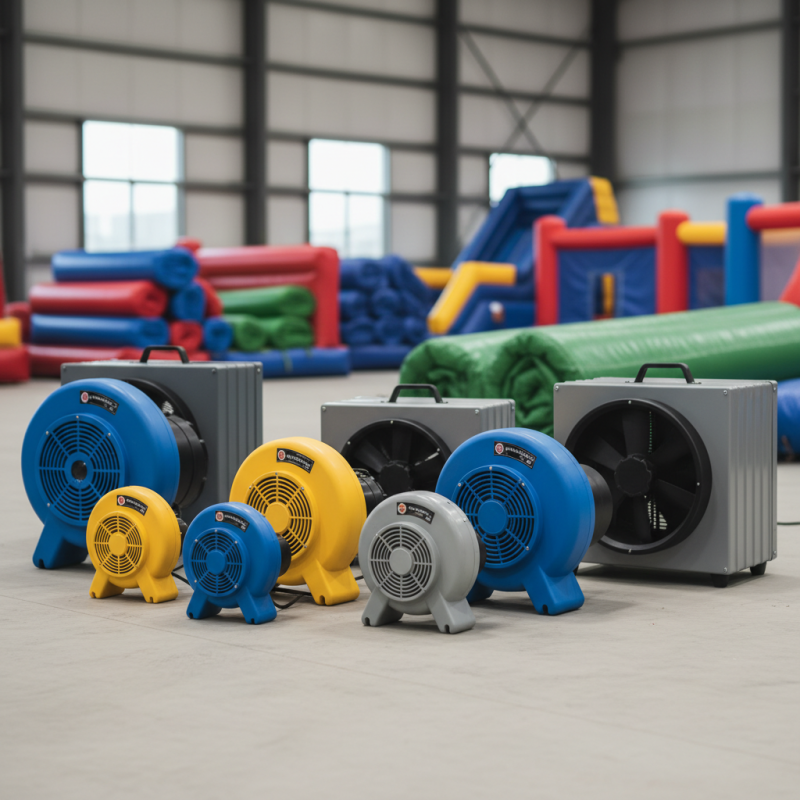
Understanding Different Types of Inflatable Blower Fans Available
When choosing an inflatable blower fan, it's essential to understand the various types available. There are two primary categories: electric and gas-powered fans. Electric fans are energy-efficient and easy to use. They are ideal for indoor settings, providing a consistent airflow for inflatables. In contrast, gas-powered fans offer stronger airflow, making them suitable for larger outdoor events. However, they require more maintenance and fuel.
Another important aspect to consider is the fan's size and power output. Some fans are designed for smaller inflatables and may not have enough power for larger structures. In contrast, heavy-duty fans can inflate large obstacles quickly but can be overkill for smaller items. It's crucial to assess your specific needs before making a purchase.
Noise levels can also vary significantly between different types of fans. Some models operate quietly, while others can be quite loud. If you plan to use the fan in a residential area or near sensitive environments, this factor may impact your choice. Evaluating these elements will help you select the best inflatable blower fan for your situation. Take the time to read reviews and consider user experiences.
Evaluating Airflow Rates and Their Impact on Performance
When selecting an inflatable blower fan, airflow rate is crucial. It directly affects the fan's ability to inflate and maintain structures. A higher airflow rate typically means quicker inflation. However, this does not always equate to better performance. Sometimes, fans with lower airflow can handle specific applications more efficiently.
Understanding the type of inflatables you will use is essential. For larger structures, look for pumps that offer higher cubic feet per minute (CFM). This quantifies how much air the blower can provide. However, consider the sound levels as well. Fans with high CFM can be louder, which might be disruptive in certain environments.
In practice, customers sometimes overlook airflow adjustments. Not every occasion requires maximum power. Using lower settings for smaller inflatables can save energy and reduce noise. It's worth taking the time to test different fans in real-world scenarios. This experimentation can reveal surprising results. You may find that the perfect blower for your needs isn’t the one with the highest specs.
Examining Energy Efficiency Ratings for Inflatable Blower Fans
When selecting an inflatable blower fan, energy efficiency is a key factor. The U.S. Department of Energy states that high-efficiency models can reduce electricity costs by 30%. Many consumers overlook this important detail. Ignoring energy ratings can lead to higher long-term expenses, even if the upfront cost seems appealing.
Research suggests that blower fans with an Energy Star rating utilize less power without sacrificing performance. Models with this label typically consume around 350 watts, compared to standard units, which may use up to 600 watts. This difference adds up over time, especially for those using the fans frequently. Opting for energy-efficient options contributes to both cost savings and environmental sustainability.
However, not all energy-efficient fans perform equally. Some may struggle to maintain adequate airflow. It's crucial to assess performance specifications along with energy ratings. A fan that consumes less power but underperforms can lead to dissatisfaction. Reading user reviews and expert evaluations can provide deeper insights into real-world performance.
Budgeting: Cost-Effectiveness of Various Inflatable Blower Fan Models
Choosing the right inflatable blower fan can influence your budget. Various models are available at different price points. A study from the Inflatable Industries Association shows that consumers often overlook the long-term savings associated with energy-efficient models. For example, energy-efficient blowers can save up to 30% on electricity costs over time.
When evaluating cost-effectiveness, initial purchase price is just one aspect. Maintenance costs should also be considered. Some fans may have a lower upfront cost, but higher maintenance expenses can offset those savings. A report by the Consumer Electrification Institute indicates that durability and warranty options significantly affect ownership costs. Low-cost models often come with shorter warranties, leading to potential replacements sooner than expected.
It is important not to be swayed solely by the price tag. Understanding your specific needs matters. Different applications require various fan capabilities. For instance, commercial-grade fans usually cost more, but they provide superior performance and longer lifespan. Reflecting on your individual requirements will lead to a wiser investment. Consider both the purchase price and potential future costs before deciding.
How to Choose the Best Inflatable Blower Fan for Your Needs?
| Model Type | Power (W) | Airflow (CFM) | Price ($) | Weight (lbs) |
| Standard Blower | 800 | 500 | 150 | 15 |
| Heavy-Duty Blower | 1200 | 700 | 250 | 22 |
| Compact Blower | 500 | 300 | 100 | 10 |
| Eco-Friendly Blower | 600 | 400 | 120 | 12 |
| High-Performance Blower | 1500 | 900 | 300 | 25 |