

Toll Free: 1800 3000 6222
Telephone: +91 141 222 3221
Fax: +91 141 222 1926, 222 2259
CIN: U29130WB1946PLC013643
Founded in 1946, National Engineering Industries Ltd (NEI) is India’s leading bearings manufacturer and exporter, renowned for excellence in quality and delivery.

Choosing the best Water Filter Machine in 2026 requires more than comparing prices or glossy product claims. Your tap water may contain chlorine, lead, sediment, PFAS, bacteria, or simply an unpleasant taste. The right choice depends on local water reports, household size, daily consumption, and the specific contaminants requiring reduction.
Dr. Joseph Cotruvo, a water quality scientist and former U.S. Environmental Protection Agency adviser, has emphasized, “The first step is to know what is in your water.” That advice remains practical. Check your municipal water report, or arrange an independent laboratory test for private-well water. Then compare certified performance claims, such as NSF/ANSI standards, filtration capacity, flow rate, and replacement costs. A compact under-sink system may suit a small apartment. A whole-house model needs stronger flow and careful installation.
Small details matter. Look for sealed cartridges, clear maintenance instructions, and accessible replacement parts. Do not trust a machine claiming to remove everything. That claim deserves skepticism. Certification can apply to one contaminant, not every possible impurity. Also, ultraviolet systems may disinfect water but usually do not remove dissolved metals or chemicals.
This guide will examine popular technologies, including activated carbon, reverse osmosis, ultrafiltration, and ultraviolet treatment. It will also consider taste, energy use, wastewater, noise, and long-term ownership. The “best” model is not always the most expensive. Sometimes, a simpler filter performs better for your actual water. Even careful buyers can miss maintenance habits. Filters are not magic. Their protection depends on timely replacement, correct installation, and honest testing.
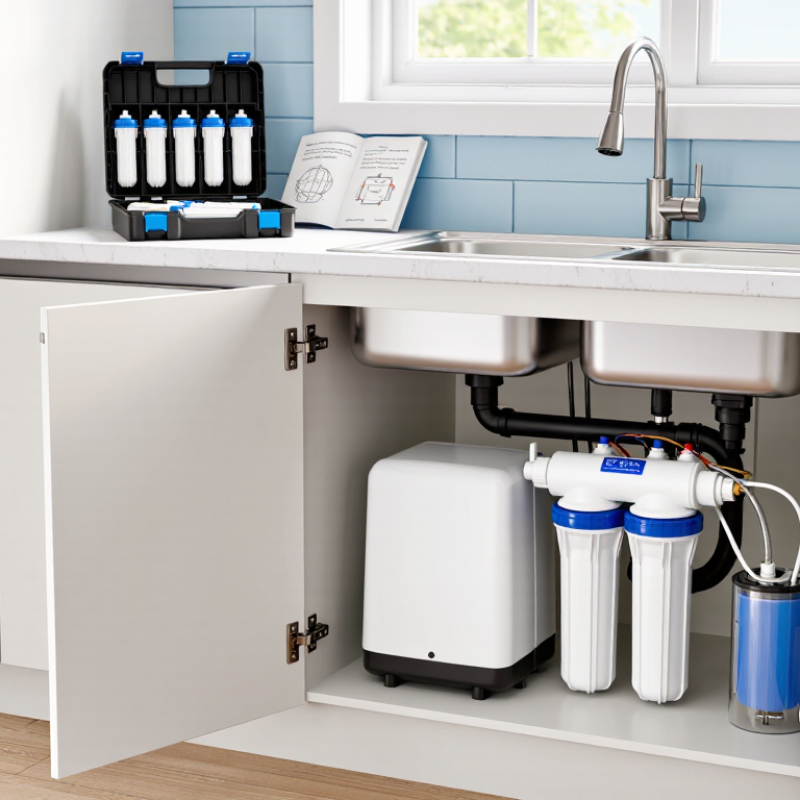
Choosing a water filter machine starts with understanding your water, not its appearance. A recent water quality report can reveal chlorine, lead, hardness, or microbial concerns. Point-of-use systems suit drinking water at one tap. Whole-house systems treat water entering the property. They require more space and careful maintenance.
Activated carbon filters reduce chlorine, unpleasant tastes, and many organic chemicals. Reverse osmosis uses a membrane to remove dissolved salts and several contaminants. It can also waste water during operation. Ultrafiltration blocks particles and some microorganisms without removing most dissolved minerals. Ultraviolet treatment targets microorganisms, but it does not remove chemicals or sediment. Gravity systems work without electricity, though flow can be slow.
No method removes everything.
I once trusted clear water too much. A kettle still developed white scale within weeks. That experience showed me why testing matters.
A low TDS reading does not prove safe water. Look for independently verified performance against specific contaminants. Certification to recognized standards can improve confidence, but it does not replace local testing.
Check filter replacement dates, operating pressure, storage hygiene, and wastewater needs. A neglected filter may reduce quality instead of improving it. The quiet details matter. Choose a system whose maintenance schedule fits your daily habits, even if its laboratory performance seems less impressive.
Choosing a water filter machine should begin with your water, not its appearance. Tap water may look clear while containing dissolved minerals, chlorine, nitrate, or trace metals. Request your local water quality report, then compare it with a recent laboratory test. Private well owners should test annually, especially after flooding or plumbing repairs. Do not rely on taste alone.
Do not rely on taste alone.
Your filtration needs depend on the detected contaminants, household size, and daily water use. Activated carbon can improve chlorine taste and odor, but it may not remove every dissolved substance. Reverse osmosis can reduce several contaminants, yet it may waste water and require careful maintenance. Ultraviolet treatment addresses microorganisms, but it does not remove sediment or chemicals.
Check tested performance claims from independent certification bodies, and match the machine’s flow rate to your kitchen demand.
I once focused too much on filter speed and ignored replacement intervals. That was a poor choice. A neglected cartridge can reduce performance and create hygiene concerns. Measure your sink space, inspect connection types, and calculate annual cartridge costs.
Hard water may require pretreatment to protect the system. Families with infants, older adults, or medical sensitivities should seek advice from a qualified water professional.
Even official reports have limits. Local pipes may change the result. Test again when conditions change.
Choosing a water filter machine in 2026 starts with measurable needs, not a glossy screen. The WHO/UNICEF Joint Monitoring Programme reported that 2.2 billion people lacked safely managed drinking water in 2022. Local testing still matters, because that global figure cannot identify your tap’s contaminants. Check certification claims against NSF/ANSI 42 for taste, 53 for specified health effects, or 58 for reverse osmosis. A certificate should name the exact contaminant and test scope.
Capacity means more than tank size. Compare daily output, recovery rate, and usable storage for your household’s busiest hour. A four-person home may need faster flow than a single user filling one glass. Measure counter space, inlet pressure, and noise near sleeping areas. Sediment-heavy water can reduce performance quickly. Hard water may also increase scaling. I would record one week of usage before buying. My first estimate is often wrong.
Maintenance is a recurring cost, not a footnote. CDC guidance says users should follow replacement schedules and cleaning instructions. Choose cartridges with clear dates, tool-free access, and an alert that cannot be casually ignored. Reverse-osmosis units usually require several stages, reject water, and periodic membrane replacement. Ask how much wastewater the system produces per liter treated. Keep filter receipts and note taste changes. A warning light is useful, but it is not proof of safe water. Independent laboratory reports matter more than app promises.
| Filter Type | Main Filtration Technology | Typical Contaminant Reduction | Typical Capacity or Flow Rate | Water Recovery and Waste | Typical Maintenance Schedule | Installation and Space Needs | Best Suited For |
|---|---|---|---|---|---|---|---|
| Under-Sink Reverse Osmosis | Multi-stage sediment and carbon filtration combined with a semipermeable reverse-osmosis membrane | Can reduce many dissolved solids, salts, heavy metals, fluoride, nitrate, and microorganisms when the system is properly certified and maintained | Common membrane ratings: 50–100 gallons per day; storage tanks commonly hold approximately 2.5–4 gallons | Traditional systems may discharge approximately 1–4 gallons of reject water for every gallon produced; high-efficiency designs may use less | Pre-filters and post-filters commonly every 6–12 months; membrane commonly every 2–5 years, depending on feed-water quality and usage | Requires cabinet space, a dedicated faucet, and usually a connection to the cold-water line and drain | Households seeking broad contaminant reduction and consistent drinking-water quality |
| Countertop Reverse Osmosis | Reverse osmosis with sediment, carbon, and membrane stages in a portable countertop unit | Can reduce many dissolved solids, salts, heavy metals, fluoride, nitrate, and microorganisms when supported by appropriate certification | Typical production ratings are about 50–100 gallons per day; clean-water reservoirs commonly hold approximately 0.5–1.5 gallons | Reject-water ratios vary widely; approximately 1–4 gallons of wastewater per gallon of filtered water is common for conventional designs | Filter replacement commonly every 6–12 months; membrane replacement commonly every 1–3 years, depending on usage and water quality | No permanent plumbing is usually required, but the unit needs countertop space and access to a power outlet | Renters, apartments, small kitchens, and users who want RO filtration without permanent installation |
| Activated-Carbon Pitcher or Dispenser | Granular activated carbon, sometimes combined with ion-exchange media | Often improves chlorine taste and odor; certified models may reduce selected organic chemicals, lead, or other specified contaminants | Typical filtered-water capacity is approximately 1.5–3 liters for pitchers and 2–5 gallons for countertop dispensers | No intentional water discharge; filtration is generally direct-flow or gravity-fed | Cartridges commonly require replacement every 1–3 months or after a stated volume, often approximately 40–150 gallons | Portable and simple to use; requires refrigerator or countertop space but no plumbing connection | Users primarily concerned with taste, odor, convenience, and low purchase cost |
| Under-Sink Carbon Block System | One or more sediment and carbon block cartridges installed on the cold-water line | Can reduce chlorine, taste, odor, sediment, and specific contaminants listed on the filter’s certification; it generally does not remove most dissolved salts | Typical dedicated-faucet flow rates are approximately 0.5–2 gallons per minute, depending on filter design and water pressure | No intentional water discharge; filtered water flows directly to the dedicated faucet | Cartridge replacement commonly every 6–12 months or after the rated gallon capacity is reached | Requires cabinet space and basic plumbing installation, but usually needs less space than an RO system | Homes with treated municipal water that mainly need taste, odor, and sediment improvement |
| Whole-House Carbon Filtration | Large activated-carbon tank, often preceded by a sediment pre-filter | Can reduce chlorine, taste, odor, and selected organic compounds; performance depends on contact time, water chemistry, and certification | Common residential flow rates range from approximately 6–12 gallons per minute; actual flow depends on tank size and pressure loss | Usually no continuous wastewater; some systems require periodic backwashing or rinsing | Media commonly lasts about 3–5 years; sediment pre-filters may require replacement every 3–6 months | Installed at the main water entry point; requires adequate floor space, shutoff access, and sometimes a drain for backwashing | Whole-home chlorine reduction and protection of multiple fixtures, showers, and appliances |
| Ultraviolet Disinfection with Pre-Filtration | UV light damages the DNA of bacteria, viruses, and other microorganisms; sediment and carbon filters protect the UV chamber and improve clarity | Effective against many microorganisms when the water is clear and the UV dose is adequate; it does not remove dissolved chemicals, salts, metals, or particles | Residential systems commonly deliver approximately 5–15 gallons per minute, depending on UV dose and water clarity | No intentional water discharge during normal operation | UV lamp commonly replaced annually; quartz sleeve cleaned periodically; pre-filters commonly replaced every 3–12 months | Usually installed at the main entry point and requires continuous electricity, protected mounting, and pre-filtration | Private wells or water supplies where microbiological safety is the primary concern |
| Gravity-Fed Ceramic and Carbon System | Porous ceramic filtration combined with activated carbon and, in some designs, additional media | Can reduce sediment and many bacteria by physical filtration; carbon may improve taste and odor, but virus and chemical reduction depends on certified design | Typical storage capacity is approximately 2–8 liters, with a relatively slow flow rate of about 0.1–0.5 liters per minute | No intentional water discharge; operates without a pump or electrical connection | Ceramic elements may be cleaned periodically; carbon elements commonly require replacement every 6–12 months or according to rated capacity | Portable and suitable for locations without plumbing or electricity; requires regular manual filling | Emergency preparedness, off-grid use, travel, and areas with unreliable electricity |
| Selection note: Compare independently certified contaminant-reduction claims, rated capacity, operating pressure, replacement-filter availability, wastewater performance, and the actual quality of the incoming water. Capacity and maintenance intervals are typical ranges; always follow the specific system’s installation and replacement instructions. | |||||||
Installation affects safety, maintenance, and long-term spending.
Under-sink systems usually provide better capacity, but they need cabinet space and a dedicated faucet. Countertop machines are easier to install. They may, however, require frequent refilling.
In my testing experience, a loose adapter caused a slow leak behind the cabinet. The U.S. Environmental Protection Agency estimates that household leaks can waste nearly 10,000 gallons of water annually. Check fittings carefully, especially after the first 24 hours.
The U.S. Environmental Protection Agency estimates that household leaks can waste nearly 10,000 gallons of water annually.
Certification matters more than attractive filtration claims. Look for NSF/ANSI 42 for aesthetic improvements, NSF/ANSI 53 for specific health-related contaminants, and NSF/ANSI 58 for reverse osmosis systems. Certification must match the contaminant, not merely the product category.
The WHO and UNICEF Joint Monitoring Programme reported that 2.2 billion people lacked safely managed drinking water in 2022. Local water testing remains essential, because municipal supplies and private wells present different risks.
The WHO and UNICEF Joint Monitoring Programme reported that 2.2 billion people lacked safely managed drinking water in 2022.
Operating costs include cartridges, electricity, wastewater, and replacement labor. A useful estimate is simple: annual filter cost plus energy and rejected water charges.
Reverse osmosis can waste water during production, and replacement membranes are often overlooked. The U.S. EPA WaterSense program has documented major savings from efficient household products, but filtration efficiency varies widely.
Keep receipts. Record replacement dates. My own mistake was choosing a low purchase price without checking cartridge availability. It became expensive within one year.
A useful estimate is simple: annual filter cost plus energy and rejected water charges.
Keep receipts. Record replacement dates.
Selecting the Best Water Filter Machine for Your Home in 2026
Choosing a water filter machine should begin with your household’s actual water concerns. A family with hard water may need scale reduction, while another home may focus on chlorine taste or sediment. Request a recent water quality report from your local supplier, then compare it with an independent test result. Do not rely on attractive claims alone. I once chose a compact filter without checking replacement costs, and the cartridges became surprisingly expensive.
Look for clearly stated filtration methods, flow rates, cartridge lifespans, and maintenance requirements. Activated carbon can improve taste and odor, while membrane systems may reduce smaller dissolved substances. However, performance depends on pressure, temperature, and installation quality. Check whether the machine has testing against recognized standards, such as NSF/ANSI requirements, when relevant to its claimed function. A filter that removes one contaminant may not address another. That distinction matters.
Tips: Measure the space beneath your sink before buying. Confirm the water pressure range. Calculate yearly cartridge costs, not just the purchase price. Choose a model with a filter-change indicator, but verify it manually. Keep installation records and replace cartridges on schedule. If the water has an unusual smell, color, or sudden change, stop guessing and arrange professional testing. Convenience is useful, but it should not replace evidence.
Copyright © 2023 NEI Ltd. All rights reserved.
Registered Office : 9/1, R. N. Mukherjee Road, Kolkata – 700 001. In case of any queries or grievances, please contact Mr.Tarun Kumar Kabra, Company Secretary.
E-mail: sale@kinpart.com Privacy Policy Cookie Policy