

nbc logo (2)
Office address
National Engineering Industries Ltd.
Khatipura Road Jaipur – 302006 Rajasthan, India
Phone Number

Toll Free: 1800 3000 6222
Telephone: +91 141 222 3221
Fax: +91 141 222 1926, 222 2259
CIN: U29130WB1946PLC013643

How to Choose the Right Chemical Heating System?

Chemical Heating is not a one-size-fits-all purchase. A system that works well for a clean, water-based process may struggle with viscous fluids, changing batch sizes, or uneven heat loss. The right choice starts with the material, the required temperature range, and how the process operates each day. Small details matter. A cold pipe section, a slow start-up, or a temperature swing can affect product quality and energy use.

Before comparing equipment, define the heating duty clearly. Record the fluid’s properties, flow rate, operating and maximum temperatures, and the time available for heating. Consider whether the process is continuous or batch-based. Note ambient conditions, insulation, cleaning needs, and available utilities. Then compare system types, control accuracy, construction materials, maintenance access, and total operating costs—not just the purchase price. Ask suppliers for performance data based on your actual operating conditions, and have qualified process or thermal engineers review the assumptions. A catalogue rating alone may not reflect real-world performance. It can be misleading.

There is no universally best system. The most efficient option on paper may not suit a site with frequent changeovers or limited space. This guide explains how to weigh those trade-offs, identify useful questions, and narrow the options using evidence rather than guesswork. Some inputs may still be uncertain at the start. Be honest about them. A careful selection process can reduce avoidable downtime, improve temperature consistency, and support safer, more dependable operation.
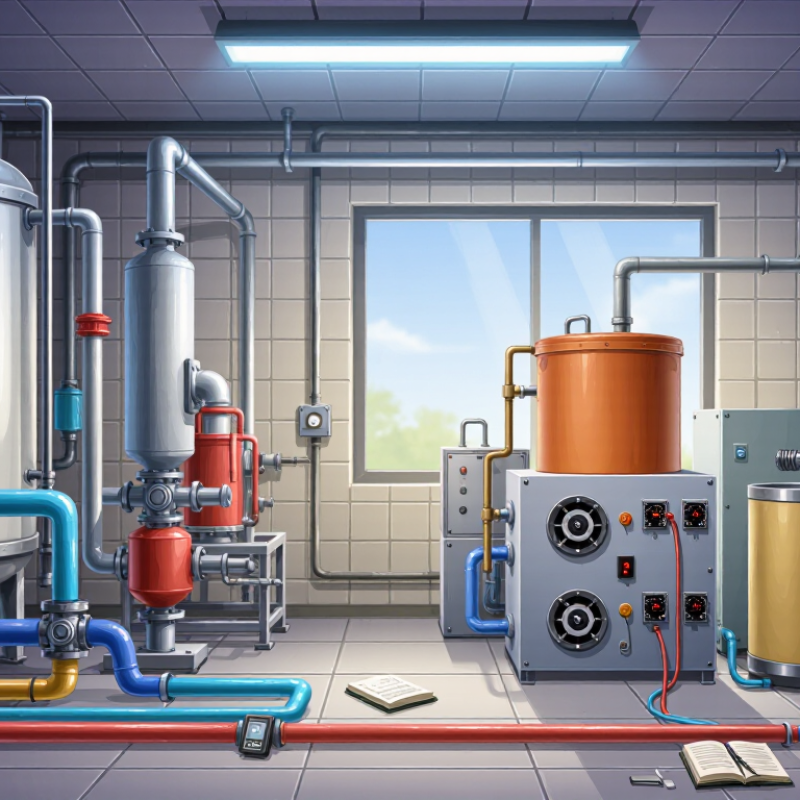
How to Choose the Right Chemical Heating System?

Identify the Process Requirements and Heating Objectives

How to Choose the Right Chemical Heating System?

Identify the Process Requirements and Heating Objectives

Start with the material, the target temperature, and the required heating time. The U.S. Department of Energy’s Improving Process Heating System Performance sourcebook estimates that process heating uses roughly 17% of U.S. industrial energy. That scale makes efficiency worth examining, but the right system depends on the specific process. A batch tank holding a viscous liquid may need steady, even heat; a short production cycle may call for a faster response. Record operating temperatures, batch volumes, heat-up times, and temperature limits. Measure at the load. A sensor beside the heater may not reveal cold spots in the tank.

Define the objective in measurable terms: temperature uniformity, production rate, product quality, or reduced energy use. Then assess the fluid’s viscosity, corrosiveness, and tendency to form deposits, along with the vessel material and available utilities. Consider insulation, controls, maintenance access, and how often the process starts and stops. These details influence heat-transfer performance and operating cost. A calculation is useful, but it can miss real-world losses from piping, poor insulation, or changing production schedules. Verify assumptions against operating data where possible.

Tips: Log inlet, outlet, and vessel temperatures during a typical run. Note the time needed to reach setpoint, and check readings at several locations. Small details matter. Revisit the measurements after production changes; yesterday’s requirements may no longer fit.

How to Choose the Right Chemical Heating System?

Identify the process requirements and heating objectives

Compare the required process temperature with the typical operating range of each heating method. These ranges are indicative, not design limits: actual capability depends on pressure, equipment design, heat-transfer fluid, and applicable safety requirements.

Compare Chemical Heating System Types and Operating Principles

Chemical heating systems differ in how they create and transfer heat. Electric resistance units pass current through heating elements, producing heat close to the process. They offer precise control and avoid on-site combustion, but their power demand can be substantial. A small temperature overshoot may also affect sensitive materials.

Direct-fired systems burn fuel and transfer heat from hot gases to a vessel or process stream. They can deliver high temperatures quickly. However, burner control, exhaust handling, and uneven heating need careful attention. In indirect systems, steam or thermal fluid carries heat through coils or a jacket, keeping combustion separate from the material. Steam transfers energy as it condenses; thermal fluid circulates while remaining liquid at higher operating temperatures. That distinction matters.

Compare operating range, response time, and heat-transfer area against the process needs. A viscous liquid may warm slowly near a vessel wall, even when the heater reaches its target temperature. Insulation and circulation can reduce that gap, though neither fixes poor equipment sizing. A neat calculation can still miss real operating conditions. Pilot trials or measured temperature profiles may reveal uneven zones before full-scale operation. Safety controls should match the heat source, process fluid, and possible loss-of-flow conditions.

Evaluate Material Compatibility and Temperature Control Needs

How to Choose the Right Chemical Heating System?
Evaluate Material Compatibility and Temperature Control Needs

A heating system must suit the chemical, not just the target temperature. Check the fluid’s safety data sheet and supplier specifications for operating limits, viscosity changes, and material restrictions. Then compare those limits with every wetted component, including piping, seals, and heat exchangers. A compatible-looking alloy can still corrode in a particular concentration or under repeated thermal cycling. Small details matter. For example, a seal that softens may cause a slow leak before operators notice a temperature problem. The U.S. Department of Energy’s Advanced Manufacturing Office reports that process heating accounts for about 36% of energy used in U.S. manufacturing. That figure makes heat-transfer efficiency worth examining, but it does not tell you which system fits a specific chemical.

Temperature control deserves equal scrutiny. Define the normal operating range, allowable variation, ramp rate, and acceptable temperature difference across the vessel. Place sensors where they reflect the process, not merely where installation is convenient. A probe near a heating surface may read hotter than the bulk liquid. Review control response under changing loads, and confirm that alarms and independent limits address foreseeable overheating. NIST guidance on temperature measurement emphasizes calibration and measurement uncertainty; ask for documented sensor accuracy and calibration procedures. Test the setup with the actual fluid when practical. Lab results help, but plant conditions can be messier. That gap deserves a second look.

How to Choose the Right Chemical Heating System? - Evaluate Material Compatibility and Temperature Control Needs

Heating system How it transfers heat Material compatibility checks Temperature control considerations Often considered for Key limitation
Immersion heater An element transfers heat directly to the liquid in a tank or vessel. Check the wetted sheath, fittings, and seals against the chemical, its concentration, and operating temperature. Stainless steel is not universally suitable; more resistant alloys or nonmetallic materials may be needed for some services. Use a process sensor and suitable controller. Maintain adequate liquid level and mixing to limit local overheating and prevent heater exposure. Tank heating where the liquid can safely contact the selected heater materials. Direct contact can create corrosion, fouling, or localized hot spots if the materials or operating conditions are unsuitable.
Electric circulation heater A pumped process stream flows through a heated chamber or tube bundle. Verify compatibility of all wetted surfaces, including the chamber, element sheath, seals, and piping. Consider concentration, contaminants, and cleaning chemicals. Outlet temperature can be regulated with a sensor and controller. Flow rate, heater power, and sensor placement affect response and temperature uniformity. Continuous or recirculating liquid processes that need controlled outlet temperature. Requires adequate flow and protection against low-flow or no-flow operation to reduce the risk of overheating.
Steam jacket or steam coil Steam condenses in a jacket or coil and transfers heat through the vessel wall or coil surface. The process chemical does not normally contact the steam side, but vessel and coil materials must suit the process. Assess condensate handling and the consequences of a leak between circuits. Temperature depends on steam pressure, heat-transfer area, and process conditions. A control valve, temperature sensor, and condensate drainage help regulate operation. Vessels and processes with an available steam supply and heating requirements within the steam system’s capabilities. Temperature control is tied to steam conditions; condensation and drainage must be managed to avoid uneven heating and water hammer.
Thermal-fluid system A separate heated fluid circulates through a jacket, coil, or heat exchanger to warm the process indirectly. Select process-side materials for the chemical and specify a heat-transfer fluid suited to the system’s temperature range and safety requirements. Keep the two circuits separated and inspect for leaks. A heater controller and circulation loop can provide controlled supply temperature. Allow for fluid thermal lag, flow stability, and expansion. Indirect heating where direct contact with an electric element is undesirable or a separate heat-transfer loop is useful. The fluid has operating and degradation limits; the loop needs appropriate expansion, maintenance, and leak-management provisions.
Electric heat tracing A cable or heating element warms the outside of a pipe, vessel, or fitting, usually beneath insulation. The heater is generally outside the process boundary; confirm the pipe or vessel material, insulation, and cable construction suit the environment and chemical-service hazards. A line-sensing thermostat or temperature controller can maintain a setpoint. Sensor location and insulation quality affect control accuracy. Freeze protection, viscosity maintenance, and temperature maintenance along process lines. Generally suited to maintaining temperature rather than rapidly heating a large process inventory.
Hot-water jacket or coil Circulating hot water transfers heat indirectly through a jacket or coil. The process-side vessel or coil must be compatible with the chemical. Check water-side materials and water quality for corrosion, scaling, and deposits. Control supply-water temperature and flow, and monitor the process temperature. Water’s boiling point at the system pressure constrains achievable temperatures. Moderate-temperature heating where a hot-water loop is available. Typically less suitable than higher-temperature heat-transfer media when the process requires temperatures beyond the loop’s practical operating range.

Selection note: Confirm chemical compatibility using the exact chemical composition, concentration, temperature, and exposure conditions. Final sizing and control design should also account for heating load, flow or mixing, allowable temperature variation, pressure, hazardous-area requirements, and applicable codes.

Assess Safety, Energy Efficiency, and Maintenance Requirements

How to Choose the Right Chemical Heating System?

Assess Safety, Energy Efficiency, and Maintenance Requirements

Start with the process fluid and its operating limits. Check its compatibility with every wetted surface, seal, and gasket. A mismatch may cause corrosion or a slow leak that is easy to overlook. Confirm the heater’s pressure and temperature ratings, then consider what happens during a control failure. Independent over-temperature protection, pressure relief, and leak detection can reduce risk. Keep access clear around inspection points. Small details matter.

Efficiency depends on the actual heating load, not just the largest number on a specification sheet. An oversized unit may cycle frequently, wasting energy and stressing components. Insulation on pipes and vessels helps retain heat, while well-chosen controls can prevent temperature swings. Maintenance needs deserve equal attention. Ask how easily technicians can reach pumps, sensors, and drain points. Check the recommended schedule for fluid sampling, seal inspections, and sensor calibration. Keep a simple service log. In practice, schedules sometimes slip, so choose a system with parts that are straightforward to inspect and replace. A tidy installation helps, but it cannot compensate for unclear procedures or neglected fluid checks.

Select and Integrate the Best-Fit Heating System

Choosing a chemical heating system starts with the process, not the equipment catalog. Define the required temperature range, heating rate, operating hours, and acceptable temperature variation. A jacketed vessel may need steady, even heat; a short transfer line may need a compact, responsive solution. Fit matters.

Check the fluid’s viscosity and thermal stability across the full operating range. Review wetted materials for compatibility, and consider insulation, circulation, and heat loss at connections. A system that reaches the target temperature but creates hot spots can damage product quality. That detail is easy to miss. Size the heater for the real heat load, including startup and expected losses, rather than relying on a rough estimate alone. The first calculation may need revision.

Integration deserves equal attention. Confirm available electrical or utility capacity, control-sensor locations, access for maintenance, and how the heater will respond to process changes. Keep sensors close to the area where temperature matters, not merely where installation is convenient. Ask operators to review the layout; they often notice awkward valve access or cleaning constraints early. Document operating limits and test controls under realistic conditions before routine use. A careful review can prevent expensive adjustments later.