10 Industrial Transformer Buying Tips for Global Buyers
Buying an Industrial Transformer is a grid decision, not merely a price comparison. A failed unit can stop a production line, delay exports, and create expensive safety risks. Global buyers must examine electrical performance, manufacturing quality, delivery capability, and long-term service support together.
The International Energy Agency’s Electricity 2024 report expects global electricity demand to grow by about 3.4% annually from 2024 to 2026. Its Electricity Grids and Secure Energy Transitions report also estimates that more than 80 million kilometres of grids must be added or refurbished by 2040. These figures indicate sustained transformer demand, but they also signal pressure on factories, materials, testing capacity, and shipping schedules. Lead times may look acceptable on paper. Reality can be less comfortable.
This guide presents ten practical buying tips for global purchasers. It considers kVA rating, primary and secondary voltage, frequency, vector group, impedance, cooling method, insulation level, losses, noise, and environmental conditions. It also explains how IEC 60076 requirements, factory acceptance testing, inspection records, and warranty terms affect purchasing risk. CIGRE technical guidance and national energy-efficiency regulations provide useful reference points, but requirements differ across markets. Check carefully.
A reliable supplier should provide traceable test reports, clear drawings, verified materials, and realistic delivery commitments. Site conditions matter too. Salt air, altitude, dust, humidity, and unstable voltage can change the correct design. No checklist removes every uncertainty. However, disciplined questions expose weak assumptions before payment, installation, or commissioning.
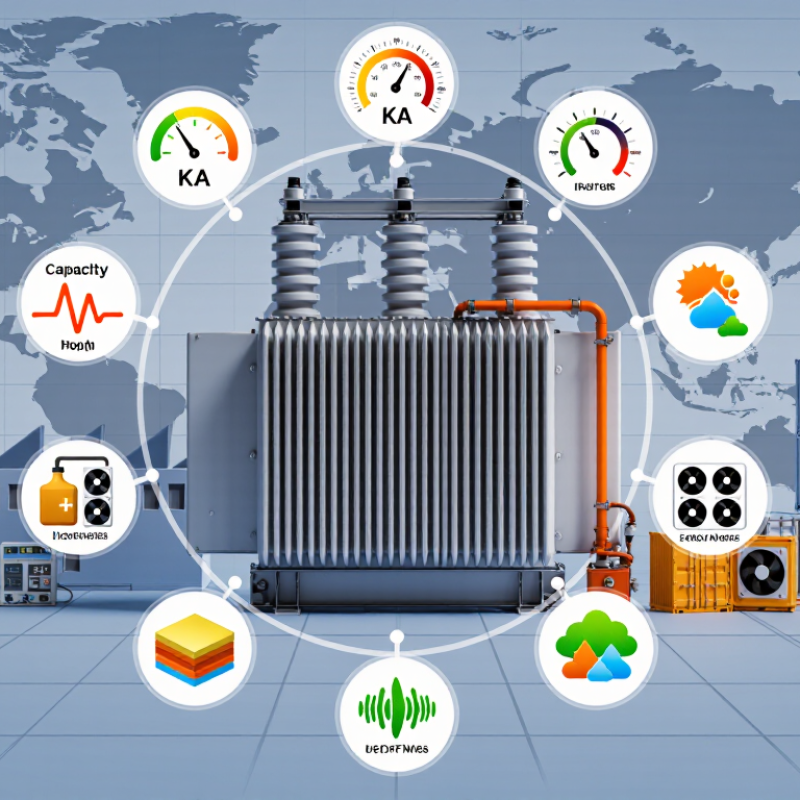
Define the Transformer’s Application, Load Profile, and Operating Conditions
Industrial transformer purchasing starts with the application, not the nameplate rating. Identify whether the unit will serve motors, furnaces, data equipment, renewable generation, or mixed loads. Record normal demand, peak demand, duty cycles, and future expansion. A transformer running at 40% load may need different efficiency and cooling choices than one facing daily overloads. Motor starting can create severe inrush currents. Variable-speed drives can add harmonics and heat.
Tip: Build a 24-hour load profile.
Include ambient temperature, altitude, humidity, dust, salt exposure, and installation space in the specification. Cooling method and enclosure protection should match the site, not a standard catalogue option. IEC 60076 provides the core framework for transformer design and testing. The International Energy Agency reported in Electricity Grids and Secure Energy Transitions (2023) that transformer and cable lead times had doubled over three years. Accurate requirements can prevent costly redesigns and procurement delays.
Tip: Ask for measured operating data, not estimates.
Check short-circuit levels, grounding arrangements, voltage fluctuations, frequency, and allowable noise. For facilities with nonlinear loads, request harmonic measurements and thermal derating calculations. U.S. Department of Energy analyses have highlighted rising distribution-transformer demand and the importance of loss reduction across equipment lifecycles. Efficiency matters, but the lowest purchase price may not deliver the lowest ownership cost. A perfect specification is rare. Recheck assumptions before approval.
10 Industrial Transformer Buying Tips for Global Buyers
Define the Transformer’s Application, Load Profile, and Operating Conditions
The chart shows representative planning values for average and peak transformer loading by application, expressed as a percentage of transformer nameplate capacity. Actual selection should also consider motor starting current, harmonic distortion, ambient temperature, altitude, duty cycle, future expansion, and local electrical standards. These figures are engineering reference ranges rather than universal limits.
Select the Correct Transformer Type, Capacity, Voltage, and Frequency
Selecting an industrial transformer starts with the load, not the catalog. Choose a dry-type unit for clean indoor locations and fire-sensitive facilities. Use a liquid-immersed unit when higher capacity, outdoor operation, or stronger heat dissipation is required. The choice depends on enclosure, cooling, altitude, humidity, and maintenance access.
Estimate continuous load, motor starting current, harmonics, and future expansion. A practical design often keeps 15–25% spare capacity, but this is not universal. Oversizing can increase purchase cost and no-load losses. Undersizing creates heat, nuisance trips, and shortened insulation life. I have seen projects fail because engineers calculated average demand instead of the five-minute peak. Check the actual load profile. It matters.
Match primary and secondary voltage precisely, including tap range and grounding arrangement. Confirm whether the site uses 50 Hz or 60 Hz; frequency mismatch can increase losses and affect motor performance. IEC 60076 and IEEE C57 standards provide useful testing and performance references. The IEA Electricity 2024 report projects global electricity demand growth of about 4% in 2024 and continued growth through 2026. That supports realistic expansion planning. The U.S. Department of Energy’s electric-grid supply-chain review reports that large transformer lead times can reach 36 months. Specify voltage, capacity, frequency, impedance, losses, and test requirements before ordering. Do not trust a generic datasheet.
Verify Efficiency, Safety Standards, Certifications, and Protection Features
Industrial Transformer Buying Tips for Global Buyers
Tip 1: Verify efficiency at the actual load profile, not only at full load. Ask for guaranteed no-load and load losses, test conditions, and tolerance limits. The U.S. Department of Energy’s 2024 technical analysis estimates that updated distribution-transformer standards could save 3.6 quadrillion British thermal units over 30 years. Small losses matter when a transformer operates continuously.
Confirm testing under IEC 60076 or an equivalent national standard. Request certified factory test records, including winding resistance, ratio, insulation, and temperature-rise results. Independent verification is stronger than a supplier’s brochure. A perfect checklist does not exist.
Tip 2: Match safety certifications to the installation country. IEC 60076-1 supports general power-transformer requirements, while IEC 60076-11 applies to dry-type transformers. Check whether local authorities require additional conformity documents, fire ratings, or environmental declarations. Certification marks alone do not prove suitability.
Tip 3: Inspect protection features in detail. Specify temperature sensors, overload alarms, surge protection, pressure relief, and short-circuit withstand capability. Oil-filled units may need leak containment and gas detection. Dry-type units still require ventilation and thermal monitoring. Ask where each sensor is installed and how alarms connect to the control system.
Field experience shows that unclear interfaces create delays. Require drawings, terminal schedules, maintenance access dimensions, and spare-part lists before purchase. I would also review abnormal-load assumptions again; buyers often underestimate seasonal peaks. Check the enclosure rating, altitude correction, ambient temperature, and humidity. These details can change performance and safety.
Compare Suppliers, Materials, Manufacturing Quality, and Total Ownership Cost
Global buyers should compare suppliers beyond the quotation sheet. A low price can hide thinner insulation, weaker testing, or uncertain delivery control. Ask for production records, factory audit access, and references from similar industrial projects. I have learned this the hard way. Supplier presentations often look stronger than their floor practices.
Material selection affects both performance and ownership cost. Copper windings usually offer strong conductivity and mechanical durability. Aluminum may reduce initial cost and weight, but connection design needs careful review. Specify core steel quality, insulation class, cooling method, enclosure protection, and acceptable loss levels. Request test results for temperature rise, partial discharge, insulation resistance, and load losses. Missing data is a warning.
Manufacturing quality appears in small details. Inspect winding tension, joint finishing, drying procedures, paint thickness, and terminal labeling. A clean assembly area matters. It is not everything. Compare each supplier’s process controls and corrective-action records. Then calculate total ownership cost, including energy losses, transport, installation, oil or accessory requirements, maintenance, spare parts, downtime, and warranty response.
A transformer with a lower purchase price may consume more electricity for decades. My own estimates have sometimes ignored site labor and replacement delays. That mistake changed how I evaluate bids. Ask for a five-year and twenty-year cost model, using your actual load profile, electricity rate, ambient temperature, and operating hours. Suppliers should explain every assumption.
Plan Shipping, Installation, Testing, Maintenance, and Long-Term Support
Shipping starts before the transformer leaves the factory. Confirm route limits, lifting points, center of gravity, and delivery access. Use shock and tilt indicators during transit. Seal openings against rain, dust, and salt air. Desiccant packs help, but they are not a substitute for inspection. Check the foundation, crane capacity, clearances, grounding, ventilation, and oil containment before unloading. A site-ready checklist prevents expensive waiting.
Do not treat factory testing as the end of quality control. Review temperature-rise, ratio, winding-resistance, insulation, and partial-discharge results against the purchase specification. Repeat suitable tests after installation, especially after long or rough transport. Record ambient temperature and instrument details. Small differences can matter. A missed baseline can complicate future fault analysis. I have seen teams focus on energization dates and overlook simple torque checks.
Maintenance should match the transformer’s load, environment, and duty cycle. Schedule visual inspections, thermography, bushing checks, oil sampling, and protection-system tests. Keep clear records with dates, readings, and corrective actions. Plan critical spares, approved procedures, and trained local technicians before commissioning. Long-term support should include accessible technical drawings, remote troubleshooting, response times, and practical warranty conditions. A fast support promise means little without real time-zone coverage. Review the support plan annually, because operating conditions often change.