

Choosing the right Central Air Conditioner Pump requires more than comparing brand names or advertised flow rates. A pump must move condensate reliably, resist corrosion, control noise, and operate safely in humid mechanical rooms. Small failures can create large problems, including ceiling stains, mold growth, electrical damage, and unexpected shutdowns.
Dr. James E. Braun, a respected HVAC controls researcher and professor, describes the challenge clearly: “HVAC design is a balance between comfort, energy use, reliability, and cost.” This principle also applies to condensate and circulation pumps. A powerful model may waste energy. A low-cost model may struggle during peak summer humidity. Installation quality matters too. Even an excellent pump can fail when piping slopes incorrectly or filters remain blocked.
This article reviews the Top 10 Central Air Conditioner Pump Manufacturers Worldwide through practical industry criteria. These include product durability, motor efficiency, drainage capacity, acoustic performance, service support, certifications, and application range. The comparison considers established global brands and specialized manufacturers serving residential, commercial, and light industrial systems. No ranking is perfectly universal. Climate, building size, water quality, and maintenance routines can change the result. That limitation deserves attention.
Readers will find specific details, such as compact pump dimensions, high-lift performance, float-switch design, and replacement-part availability. Some manufacturers appear strong across several categories. Others perform better in narrow applications. The best choice is rarely the most expensive one. It is the pump that matches the system, installation conditions, and long-term maintenance plan.
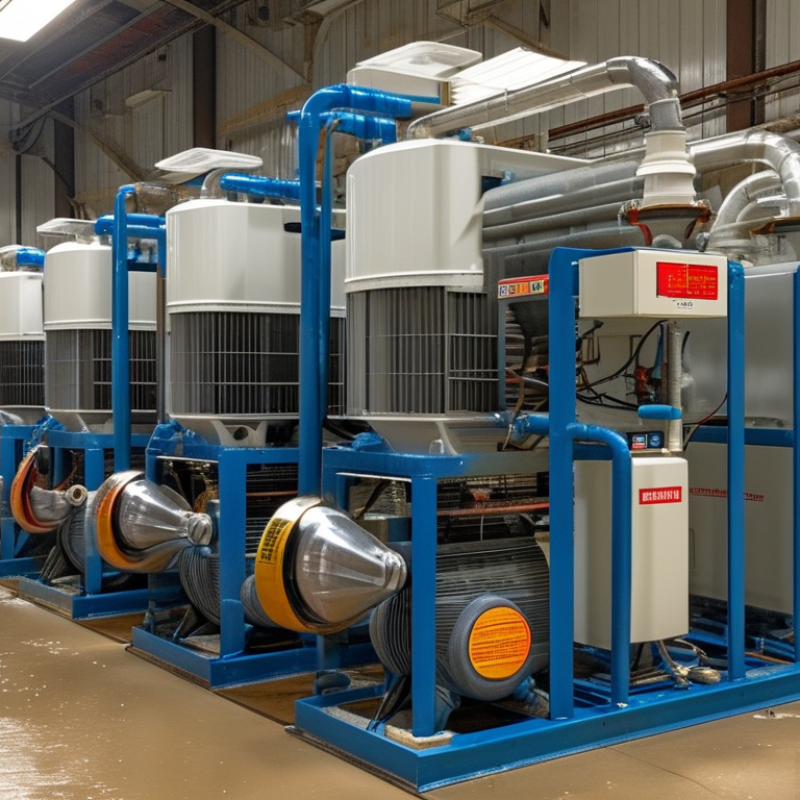
Central air conditioner pumps move water or condensate through the cooling system. In chilled-water equipment, circulation pumps deliver cooled water to coils, where air loses heat. Condensate pumps remove moisture collected beneath indoor coils. Without that drainage, water may stain ceilings, damage insulation, or encourage microbial growth.
Their value is larger than their physical size. The International Energy Agency’s The Future of Cooling report estimates that air conditioners and electric fans consume about 20% of building electricity worldwide. Pump efficiency can therefore influence operating costs, especially in large buildings with long service hours. The U.S. Department of Energy also identifies oversized pumps, throttled valves, and poor controls as common sources of wasted energy in pumping systems. Small components matter.
A reliable pump should match flow, pressure, pipe resistance, temperature, and expected duty cycles. Variable-speed control can reduce unnecessary output, but it is not automatically efficient. Incorrect settings may create noise, unstable flow, or repeated starts. Maintenance experience shows that blocked strainers, dirty sensors, and aging seals often appear before complete failure. This is where specifications alone become insufficient. Field conditions can defeat a perfect calculation. Industry reports provide useful benchmarks, yet actual performance still requires commissioning, measurement, and honest review.
| No. | Pump Type / Configuration | Primary HVAC Function | Typical Flow Range | Typical Head Range | Common Motor / Power Range | Typical Fluid Temperature | Key Selection Considerations |
|---|---|---|---|---|---|---|---|
| 1 | Condensate Removal Pump | Moves water from evaporator drain pans when gravity drainage is unavailable. | 1–20 gal/h (4–76 L/h) | 6–20 ft (1.8–6.1 m) | 20–100 W | 5–40°C (41–104°F) | Tank capacity, lift height, safety switch, noise level, and resistance to intermittent operation. |
| 2 | Inline Chilled-Water Circulator | Circulates chilled water between a chiller, air-handling units, fan-coil units, and terminal equipment. | 2–500 gal/min (0.5–114 m³/h) | 20–120 ft (6–37 m) | 0.37–75 kW | 2–15°C (36–59°F) | System flow, design pressure, pipe size, motor efficiency, variable-speed control, and water treatment. |
| 3 | End-Suction Centrifugal Pump | Provides primary or secondary chilled-water circulation in commercial and industrial systems. | 20–1,500 gal/min (4.5–341 m³/h) | 30–250 ft (9–76 m) | 1.5–250 kW | 2–15°C (36–59°F) | Pump curve, impeller diameter, cavitation margin, mechanical seal, alignment, and installation footprint. |
| 4 | Vertical Multistage Pump | Generates higher pressure in compact mechanical rooms and multi-zone HVAC installations. | 5–300 gal/min (1.1–68 m³/h) | 50–400 ft (15–122 m) | 1.5–110 kW | 2–35°C (36–95°F) | Required pressure, stage count, seal compatibility, vertical clearance, and control-panel integration. |
| 5 | Horizontal Split-Case Pump | Handles large chilled-water or condenser-water volumes in central plant applications. | 200–5,000 gal/min (45–1,136 m³/h) | 60–300 ft (18–91 m) | 15–500 kW | 5–35°C (41–95°F) | High-flow efficiency, service access, shaft alignment, bearing life, vibration control, and redundancy. |
| 6 | Vertical Turbine Pump | Supplies condenser-water circuits or raw-water systems where the water source is below the pump level. | 300–10,000 gal/min (68–2,271 m³/h) | 50–500 ft (15–152 m) | 30–1,000 kW | 5–35°C (41–95°F) | Water level variation, column length, intake conditions, corrosion protection, and outdoor-weather exposure. |
| 7 | Primary-Loop Variable-Speed Pump | Adjusts chilled-water flow to match real-time cooling demand and reduce pumping energy. | 10–1,500 gal/min (2.3–341 m³/h) | 20–180 ft (6–55 m) | 0.75–250 kW | 2–15°C (36–59°F) | Minimum-flow protection, sensor placement, control protocol, operating envelope, and part-load efficiency. |
| 8 | Condenser-Water Circulation Pump | Circulates heat-rejection water between water-cooled chillers, cooling towers, and heat exchangers. | 50–5,000 gal/min (11–1,136 m³/h) | 40–250 ft (12–76 m) | 5–500 kW | 15–35°C (59–95°F) | Open-system corrosion, suspended solids, water treatment, cooling-tower pressure loss, and seasonal conditions. |
| 9 | Magnetically Coupled Pump | Provides leak-reduced circulation for sealed secondary loops and applications requiring low maintenance. | 1–150 gal/min (0.2–34 m³/h) | 10–150 ft (3–46 m) | 0.1–15 kW | 2–80°C (36–176°F) | Dry-running protection, fluid cleanliness, magnetic torque limits, material compatibility, and heat generation. |
| 10 | Submersible Drainage Pump | Removes accumulated water from equipment pits, drain reservoirs, plant rooms, and emergency collection tanks. | 10–500 gal/min (2.3–114 m³/h) | 10–150 ft (3–46 m) | 0.5–75 kW | 5–40°C (41–104°F) | Solids-handling capacity, float-switch reliability, sump dimensions, waterproof cable entry, and automatic backup operation. |
Note: The figures above are representative engineering ranges commonly used for preliminary HVAC pump selection. Actual performance depends on system resistance, fluid properties, elevation, pipework, control strategy, and the manufacturer’s certified pump curve.