

Toll Free: 1800 3000 6222
Telephone: +91 141 222 3221
Fax: +91 141 222 1926, 222 2259
CIN: U29130WB1946PLC013643
Founded in 1946, National Engineering Industries Ltd (NEI) is India’s leading bearings manufacturer and exporter, renowned for excellence in quality and delivery.

Hydraulic oil cleanliness is no longer a minor maintenance concern. It directly affects pump life, valve response, energy use, and unplanned downtime. A Hydraulic Oil Filter Element must capture damaging particles while maintaining stable flow and acceptable pressure loss. In real workshops, a small seal failure can turn clean oil into an expensive maintenance problem.
Grand View Research reports steady growth in the global hydraulic filters market, supported by construction, agriculture, manufacturing, and mobile equipment demand. MarketsandMarkets also identifies contamination control and predictive maintenance as important market drivers. However, market estimates differ because suppliers define filter products and applications differently. The numbers deserve careful reading.
Noria founder Jim Fitch, a respected contamination-control specialist, has stated, “Contamination is the enemy of hydraulic systems.” His warning remains practical beside a dusty excavator, a clogged return filter, or a pressure gauge showing rising differential pressure. This guide evaluates the Top 10 Hydraulic Oil Filter Element Manufacturers through filtration efficiency, β-ratio performance, material quality, pressure capacity, global support, and replacement availability. ISO 4406 cleanliness targets also provide a useful technical reference.
No ranking is permanent. Equipment duty, oil viscosity, installation conditions, and service discipline can change the result. A premium element may perform poorly in the wrong housing. That point is easy to overlook. The following manufacturers are compared using technical credibility, documented experience, product breadth, and evidence from professional industry sources. Readers should still verify specifications against the original equipment manufacturer’s requirements before purchasing.
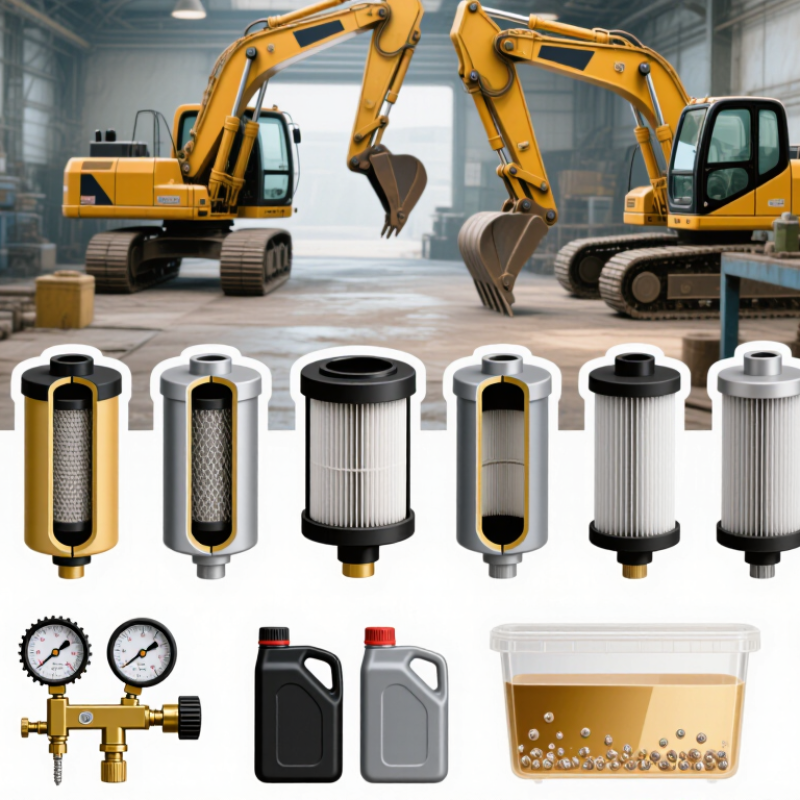
Hydraulic oil filter elements are the working barriers inside return-line, pressure-line, and suction filters. They capture particles before those particles reach pumps, valves, cylinders, and servo controls. ISO 4406:2021 classifies fluid cleanliness by particles at 4, 6, and 14 micrometres. A small change in particle count can sharply change the cleanliness code. That is easy to underestimate.
Contamination remains a major reliability concern. Technical guidance from the National Fluid Power Association commonly associates roughly 70% to 80% of hydraulic system failures with contamination. The exact percentage varies by application and maintenance quality. Still, the warning is practical.
A damaged filter element may allow abrasive dust, metal wear, or water-related sludge to circulate through a hot system. During inspections, technicians often find dark pleats, collapsed media, or a bypass indicator showing too late.
Element design affects more than particle removal. Glass-fibre media can provide high capture efficiency, while cellulose media may suit less demanding equipment and controlled budgets. The correct choice depends on beta ratio, dirt-holding capacity, pressure rating, seal compatibility, and micron performance. ISO 16889 provides the multipass test method used to compare filter performance. However, laboratory results do not replace field judgment. A filter rated at 10 micrometres may still perform poorly when installation is incorrect, oil viscosity changes, or water enters the reservoir. That uncomfortable detail deserves more attention when evaluating leading manufacturers.

Top 10 Hydraulic Oil Filter Element Manufacturers
When evaluating hydraulic oil filter element manufacturers, look beyond catalog claims. A reliable supplier should explain its media type, micron rating, beta ratio, and collapse pressure in clear test reports. Ask whether results come from independent laboratories or controlled internal testing. Both can matter, but unexplained numbers deserve caution.
Inspect manufacturing discipline at the factory level. Check batch traceability, sealing quality, adhesive control, and cleanliness during assembly. A practical audit should include random samples, not only polished demonstration units. Measure dimensions against your housing, then test flow resistance with the oil used in service. Small differences in gasket hardness can create bypass leakage. That detail is easy to miss.
Experience also appears after delivery. Manufacturers should provide replacement guidance, contamination analysis, and responsive technical support. Review their records for consistent lead times and documented corrective actions. Request samples before approving a large order. Run them through cold-start, pressure-pulse, and dirt-loading tests when possible. Do not rely on one impressive result. Field conditions are rarely perfect. I have seen specifications pass on paper while installation exposed poor fit. That is a useful warning, not a reason to reject every supplier. A stronger evaluation combines certificates, factory evidence, sample performance, and feedback from maintenance teams. Price still matters, but a cheap element that blocks early can increase downtime, labor, and fluid waste. Ask difficult questions. Record the answers.
| Rank | Anonymous Manufacturer Profile | Technical Benchmark to Verify | Required Evidence | Why It Matters |
|---|---|---|---|---|
| 1 | Profile 01 High-precision filtration | Multi-pass performance tested according to ISO 16889, with clearly stated beta ratios such as β5 ≥ 200. | Independent or traceable laboratory test reports showing test fluid, flow rate, differential pressure, and particle-counting method. | ISO 16889 testing provides a standardized method for comparing filter-element particle capture performance. |
| 2 | Profile 02 High-pressure applications | Published operating pressure, collapse pressure, and safety factor suitable for the intended hydraulic circuit. | Product datasheets, pressure-pulse test records, and confirmation of compatibility with the specified filter housing. | Insufficient structural strength can cause media failure, bypass problems, or damage to downstream components. |
| 3 | Profile 03 Contamination control | Filter ratings commonly available in the approximately 3–25 µm range, selected according to system cleanliness requirements. | Micron-rating definition, beta-ratio data, cleanliness recommendations, and application guidance for hydraulic systems. | A nominal micron value alone does not describe actual removal efficiency; beta-ratio data provides more useful performance information. |
| 4 | Profile 04 Broad fluid compatibility | Compatibility information for mineral hydraulic oils and, where applicable, water-glycol or biodegradable hydraulic fluids. | Material compatibility charts covering filter media, adhesives, seals, end caps, center tubes, and support layers. | Fluid incompatibility may cause swelling, embrittlement, delamination, or loss of filtration performance. |
| 5 | Profile 05 Low-pressure-drop design | Published pressure-drop curves at defined viscosity, flow rate, and temperature conditions. | Clean-element differential-pressure curves and recommended replacement or bypass-indicator settings. | Lower initial pressure drop can improve energy efficiency and help maintain stable actuator response. |
| 6 | Profile 06 OEM replacement capability | Verified dimensional interchangeability, including length, outside diameter, inside diameter, sealing arrangement, and connection details. | Dimensional drawings, part-number cross-reference documentation, samples, and fit verification in the actual housing. | Correct dimensions and sealing geometry are essential for preventing bypass leakage and installation failures. |
| 7 | Profile 07 Quality-system maturity | Documented quality management system aligned with ISO 9001 or an equivalent recognized framework. | Valid certification scope, batch traceability procedure, incoming-material controls, and nonconformance records. | A controlled manufacturing process improves consistency between production batches and supports corrective action. |
| 8 | Profile 08 Durable construction | Robust support components, corrosion-resistant materials, secure end-cap bonding, and uniform pleat geometry. | Construction drawings, material specifications, vibration or pressure-pulse test results, and production inspection records. | Mechanical durability helps the element withstand vibration, pressure fluctuations, and long operating cycles. |
| 9 | Profile 09 Supply reliability | Stable production capacity, documented lead-time commitments, safety-stock options, and consistent packaging standards. | Production lead-time records, lot identification, packaging specifications, and service-level or delivery performance data. | Reliable availability reduces unplanned maintenance delays and prevents the use of unsuitable substitute elements. |
| 10 | Profile 10 Application engineering support | Ability to recommend media type, filtration rating, flow capacity, seal material, and differential-pressure settings for the system. | Technical questionnaires, selection calculations, installation instructions, troubleshooting guides, and responsive engineering support. | Correct element selection depends on system pressure, flow, fluid viscosity, contamination level, and required cleanliness code. |
The leading ten manufacturers differ more by capability than by production volume. Some excel in high-pressure return-line elements, while others focus on compact suction filters, stainless-steel mesh, or biodegradable hydraulic fluids. Their strongest advantages usually include media consistency, automated pleat control, seal reliability, and traceable batch testing. Field experience shows that a filter element is only effective when its micron rating matches the system’s contamination risk.
ISO 16889 remains a key reference for multipass filtration performance. It measures beta ratios under controlled laboratory conditions, not every real operating environment. That matters. A 10-micron element can behave differently after thermal cycling, vibration, and pressure pulses. Market research published by Fortune Business Insights estimated the global hydraulic filters market at about USD 3.0 billion in 2023, with continued growth through 2032. Demand is linked to stricter equipment uptime targets and cleaner hydraulic circuits.
The strongest manufacturers typically separate themselves through core strengths: advanced glass-fiber media, high dirt-holding capacity, rapid custom sampling, or dependable global quality control. Several also provide ISO 4406 cleanliness guidance for maintenance teams. However, published ratings can hide practical weaknesses. A filter may pass laboratory testing yet clog quickly in dusty quarry conditions. Buyers should examine collapse pressure, β-ratio data, fluid compatibility, and replacement intervals. Small details matter. One overlooked gasket can contaminate an entire reservoir.
Top 10 Hydraulic Oil Filter Element Manufacturers
Leading hydraulic filter element manufacturers differ mainly in media design, testing discipline, and production consistency. Some use cellulose media for economical protection and moderate contamination levels. Others use glass-fiber media for finer filtration and higher dirt-holding capacity. Wire mesh elements suit applications requiring cleanable, durable filtration. However, finer is not always better. An overly restrictive element can increase pressure drop and shorten service life.
Quality also depends on measurable performance. Experienced buyers should check beta ratios tested under ISO 16889 conditions, collapse pressure, flow capacity, and seal compatibility. A reliable manufacturer provides traceable test data, dimensional drawings, and batch inspection records. The element should fit correctly, especially around the bypass valve and sealing surface. A small mismatch can allow unfiltered oil to circulate.
In field maintenance, I have seen filters fail because buyers compared micron ratings alone. Real performance also depends on adhesive quality, pleat spacing, end-cap bonding, and manufacturing cleanliness. Some suppliers offer impressive specifications but limited evidence. That deserves caution. Look for ISO-based quality systems, consistent lot results, and technical support from engineers who understand pumps, valves, and operating temperatures. No element is perfect. Contaminated oil, poor installation, or delayed replacement can defeat even a well-designed product. A practical selection should balance cleanliness targets, pressure loss, service intervals, and total operating cost.
Top 10 Hydraulic Oil Filter Element Manufacturers
How to Select the Right Manufacturer for Your Hydraulic System
Choosing a hydraulic filter element manufacturer requires more than comparing catalog prices. The element must match pressure, flow, fluid type, temperature, and contamination risk. ISO 16889 multipass testing provides a useful basis for comparing beta ratios and dirt-holding capacity. Ask manufacturers for current test reports, not simplified marketing claims.
MarketsandMarkets’ 2024 Hydraulic Filters Market report projects continued growth through 2029, driven by construction, agriculture, and industrial automation. That growth increases supplier choices, but selection should remain application-focused. Check whether the manufacturer controls fiber quality, adhesive curing, pleat spacing, and end-cap bonding. Small production variations can create early bypass-valve opening or pressure loss. Request batch traceability and inspection records. They matter during failure analysis.
A practical shortlist should include verified compatibility with ISO 4406 cleanliness targets and your equipment’s service intervals. Confirm the element’s collapse pressure, micron rating, seal material, and operating temperature. Do not rely on nominal micron ratings alone. Absolute ratings and beta values are more informative. A cheaper element may fit perfectly yet load too quickly. That mistake can stop a machine during peak production. It happens.
Independent laboratory testing adds credibility, especially when replacing an original element. However, laboratory results may not represent dusty sites, water ingress, or cold starts. Require field references from comparable systems, while recognizing that one reference cannot prove universal performance. A manufacturer willing to explain limitations is often more reliable than one promising perfect filtration.
Filtration requirements vary by filter location. The chart shows representative hydraulic filter element ratings commonly used for suction, return-line, pressure-line, and offline filtration. Actual specifications should be confirmed against the hydraulic system design, fluid type, flow rate, pressure, and equipment manufacturer requirements.
When evaluating manufacturers, compare micron rating, beta ratio, dirt-holding capacity, pressure-drop performance, seal compatibility, collapse pressure, ISO cleanliness capability, and documented quality control.
Copyright © 2023 NEI Ltd. All rights reserved.
Registered Office : 9/1, R. N. Mukherjee Road, Kolkata – 700 001. In case of any queries or grievances, please contact Mr.Tarun Kumar Kabra, Company Secretary.
E-mail: sale@kinpart.com Privacy Policy Cookie Policy