

Toll Free: 1800 3000 6222
Telephone: +91 141 222 3221
Fax: +91 141 222 1926, 222 2259
CIN: U29130WB1946PLC013643
Founded in 1946, National Engineering Industries Ltd (NEI) is India’s leading bearings manufacturer and exporter, renowned for excellence in quality and delivery.

Water exposure changes what buyers should ask of an aircraft. A Waterproof Drone may support coastal surveys, emergency inspections, or work in heavy rain, but the label alone proves little. Buyers need to examine immersion limits, corrosion protection, payload capacity, flight time, and after-sales support.
Market growth helps explain the rising interest. Grand View Research estimated the global commercial drone market at USD 30.02 billion in 2023 and projected a 10.6% compound annual growth rate from 2024 to 2030. This is a market estimate, not a guarantee of demand for waterproof models. Still, it signals a broader shift toward practical commercial applications. Water changes everything.
This guide introduces ten China-based manufacturers for buyers comparing waterproof-capable drones. It focuses on verifiable product information, application fit, manufacturing experience, and service availability rather than promotional claims. Where available, buyers should review test reports and confirm the exact protection rating for the aircraft, connectors, and payload. IEC 60529 defines IP-rating classifications, but a rating does not establish performance in every operating condition. Ask what was tested, how it was tested, and whether the result applies to the complete system. Tests matter.
A specification sheet can still hide weak points, especially around seals and maintenance. That deserves attention. Company capabilities and product ranges change, so verify current details directly with each manufacturer before purchasing.
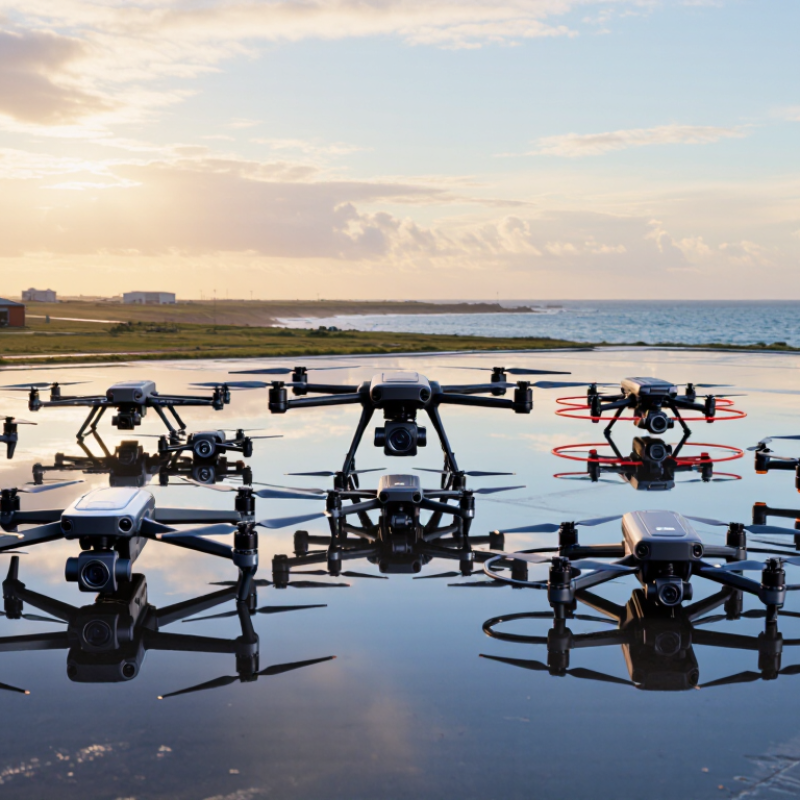
“Waterproof” is not a single performance level. IEC 60529 classifies protection using IP codes: the first digit covers solids, while the second covers water. An IPX7 test involves temporary immersion under specified conditions, commonly up to one metre for 30 minutes. That does not prove resistance to salt spray, high-pressure jets, or repeated exposure. Water finds weak points: battery doors, cable ports, seals, and cooling vents. Small details matter.
Some buyers need protection from rain; others face spray, wet grass, or brief accidental immersion. Utility crews inspecting assets, coastal survey teams, and emergency responders may work when the weather turns. NOAA’s 2023 U.S. Billion-Dollar Weather and Climate Disasters report recorded 28 events costing at least one billion dollars each. That figure does not measure drone demand, but it shows why field equipment may need to keep working in harsh conditions. Still, not every buyer needs the highest rating.
Check whether the rating applies to the complete aircraft or only selected components. Ask for the test standard, test conditions, and maintenance requirements in writing. Also compare flight time and payload after sealing changes; added protection can affect weight and heat management. Saltwater is especially unforgiving. An IP rating helps, but it is not a promise of unlimited use in wet conditions. Drying procedures and seal inspections still matter. The honest catch: a rating cannot replace careful operation.
China’s waterproof-drone manufacturing market is organized around capabilities, not one uniform supplier model. Some companies design airframes and flight systems, while specialist workshops make sealed housings, connectors, and corrosion-resistant parts. Assembly firms bring these components together and configure aircraft for inspection, mapping, or work near water.
The structure is layered. A supplier’s label alone says little about operating limits.
Buyers should ask how water resistance was tested, at what depth or spray level, and whether battery bays and payload ports were included.
The market also includes component vendors, system integrators, and service providers that support testing, repairs, and replacement parts. Their roles can overlap, so it helps to clarify who is responsible for the complete aircraft and who handles after-sales support.
Details matter. Compare written test conditions, production consistency, and maintenance guidance rather than relying on a single demonstration.
Even a clear test report can leave questions: was the aircraft tested with its actual payload, and can the seals be checked after regular use? These details reveal more than a broad waterproof claim.
China’s waterproof drone market includes suppliers focused on different operating conditions, from coastal surveys to rainy-day infrastructure checks. Rather than treating “waterproof” as one capability, buyers should compare sealing, flight stability, corrosion protection, and service support. A strong specification is useful, but field performance matters more.
Ten supplier profiles stand out for distinct strengths: sealed airframes for wet-weather flights; corrosion-resistant fittings for salt spray; protected motors for dusty, damp sites; flotation features for emergency recovery; thermal cameras for night inspections; low-light imaging for dim facilities; stabilized cameras for close surveys; quick-change batteries for longer shifts; repairable designs that simplify maintenance; and configurable payloads for specialized work. These are comparison categories, not a verified ranking of named companies. A spec sheet can still mislead. Ask for test conditions and clear limits on rain exposure, spray, and immersion.
Tips: Match the drone’s protection rating to the actual task. Check gaskets after rough landings, and request sample footage or a supervised demonstration before purchase. Small details matter.
Anonymous buyer comparison framework. No manufacturer-specific claims or ranking are attributed; confirm all capabilities against the supplier’s current product documentation.
| No. | Buyer comparison area | Key capability to assess | Evidence to request | Buyer fit |
|---|---|---|---|---|
| 1 | Ingress protection | Clear, model-specific IP rating and stated test conditions. IPX7 describes temporary immersion under specified laboratory conditions; it does not by itself establish seawater suitability. | Test report identifying the exact aircraft configuration, test standard, and limitations. | Buyers operating in rain, spray, or accidental immersion scenarios. |
| 2 | Saltwater and corrosion resistance | Protection of motors, fasteners, connectors, and exposed surfaces from corrosive marine environments. | Materials list, corrosion-test details if available, and documented fresh-water rinsing and maintenance instructions. | Coastal, offshore, and marine field operations. |
| 3 | Payload and release system | Payload capacity, attachment security, and reliable operation of any release mechanism in the intended wet conditions. | Payload limits, approved accessory list, and controlled demonstration with the intended load. | Rescue-support, delivery, and marine inspection tasks. |
| 4 | Flight endurance and range | Practical flight time and control-link performance with the intended payload and operating conditions; published maximum figures may use ideal test conditions. | Test conditions, battery details, payload impact, and communication-link specifications. | Buyers planning long coastal routes or extended inspection missions. |
| 5 | Low-speed stability | Controlled hovering and handling in wind and near water, where spray, gusts, and limited landing options can affect operations. | Wind-limit specifications and a supervised flight demonstration in representative conditions. | Precision inspection and operations near vessels or shore structures. |
| 6 | Camera and sensing options | Sensor resolution, stabilization, low-light performance, and compatibility with the required inspection or search workflow. | Sensor specifications, sample imagery, data formats, and payload compatibility documentation. | Inspection, situational awareness, and search-support applications. |
| 7 | Battery and charging workflow | Battery availability, charge time, safe handling guidance, and practical support for repeated sorties. | Battery specifications, charger details, replacement cost, and cycle-life or warranty terms. | Teams requiring frequent flights and predictable field turnaround. |
| 8 | Maintenance and repairability | Access to replacement parts, repair procedures, and post-exposure inspection guidance. | Parts list, service turnaround estimates, maintenance schedule, and warranty exclusions. | Commercial operators seeking reduced downtime and lifecycle cost control. |
| 9 | Control, safety, and compliance | Failsafe behavior, return-to-home settings, operating documentation, and support for the rules applicable in the buyer’s jurisdiction. | User manual, safety procedures, firmware details, and relevant conformity documents for the destination market. | Organizations with formal operational and procurement requirements. |
| 10 | Customization and technical support | Ability to adapt payloads, workflows, or software and provide responsive support for the ordered configuration. | Written customization scope, lead times, acceptance criteria, training options, and support terms. | Buyers with specialized missions or fleet integration needs. |
Note: Waterproof performance varies by model, configuration, condition, and test method. Confirm limits and maintenance requirements directly with the supplier before purchase or operation.
A useful comparison starts with the exact protection rating of the aircraft, not a general “waterproof” claim. Check whether the rating covers the complete drone, including battery doors, camera ports, and cable connections. An IP rating reflects specific test conditions; it does not automatically promise safe operation during prolonged submersion or in every kind of water. Ask for test documentation tied to the model you plan to buy. Also check how the manufacturer handles salt residue, since salt can corrode exposed contacts after a flight. Small details matter.
Flight figures need the same scrutiny. Compare endurance with the intended camera or sensor attached, and note the wind and temperature used in testing. A heavier sealed body may trade extra protection for shorter flight time. Look for usable control range, stable hovering, and a clearly stated low-battery reserve—not just a best-case maximum. Numbers can mislead. Support is practical, too: ask about replacement seals, battery availability, repair turnaround, and help diagnosing moisture warnings. A spec sheet may look complete while leaving one awkward gap: who checks the drone after water exposure, and what evidence is required for service?
A “top 10” list is a starting point, not proof that a drone can handle wet work. Grand View Research estimated the global drone market at USD 73.06 billion in 2024 and forecast 14.3% annual growth from 2025 to 2030. That expansion makes careful supplier checks more important, not less. Ask each manufacturer for test reports covering the exact aircraft configuration, including payload, battery, connectors, and hatch seals. Check that an independent laboratory issued the report and that its model number matches the unit being offered. Small details matter.
Read the ingress-protection rating against IEC 60529, but do not treat it as a promise of safe flight in every downpour. For example, an IP67 rating describes defined dust and water tests; it does not prove resistance to saltwater, high-pressure spray, or repeated field exposure. Request the test conditions, maintenance intervals, and written warranty exclusions. Then ask for a live demonstration: inspect the seals, review the preflight checklist, and confirm how water exposure affects service support. A factory visit can help, though it cannot replace documented tests. I would still want to see repeatable results across multiple units; one successful demonstration is reassuring, but not conclusive.
Copyright © 2023 NEI Ltd. All rights reserved.
Registered Office : 9/1, R. N. Mukherjee Road, Kolkata – 700 001. In case of any queries or grievances, please contact Mr.Tarun Kumar Kabra, Company Secretary.
E-mail: sale@kinpart.com Privacy Policy Cookie Policy