Why Use an Asparagus Optical Sorter?
Why Use an Asparagus Optical Sorter?
Asparagus quality can change within minutes after harvesting. Spears may arrive with bruised tips, uneven lengths, soil marks, or fibrous stems. Manual inspection often struggles with this variation. An Asparagus Optical Sorter uses cameras, lighting, and software to identify visible defects at production speed. It can separate damaged spears while maintaining consistent grading.
FAOSTAT production data shows asparagus remains an important commercial vegetable across several growing regions. USDA crop and market reports also highlight the importance of appearance, freshness, and pack consistency in produce sales. Industry research from Grand View Research identifies automation and quality control as continuing factors in fresh-produce processing. These findings support a practical question: can processors reduce waste without sacrificing product standards?
Helge Myklebust, a fresh-produce sorting specialist at TOMRA Food, has said, “The right technology helps processors protect quality while using more of the harvested product.” That principle explains the value of an Asparagus Optical Sorter. Better detection can improve line efficiency, reduce repetitive inspection, and create more uniform packs. The machine may notice a pale tip or tiny surface blemish that a tired operator could miss.
Still, no machine is magic. Field conditions, cultivar differences, lighting, and calibration affect results. The first setup may not be perfect. Operators need experience, testing, and regular adjustment. Processors should compare removal accuracy, product loss, throughput, cleaning needs, and service support before investing. A reliable sorter is not simply a camera on a conveyor. It is part of a careful quality system, and that system deserves honest measurement.
What Is an Asparagus Optical Sorter?
Why Use an Asparagus Optical Sorter?
What Is an Asparagus Optical Sorter?
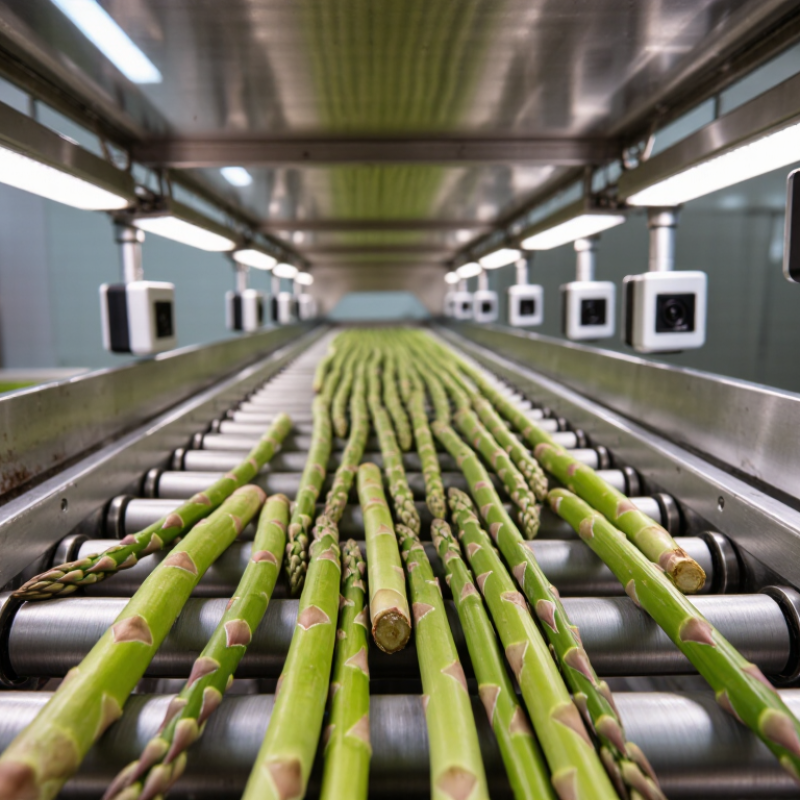
An asparagus optical sorter is a machine that inspects each spear with cameras, sensors, and software. It checks color, diameter, length, tips, bruising, and foreign material. The system then directs acceptable spears forward and removes questionable ones with air jets. In a packing facility, this process can examine product faster than manual inspection. It also creates more consistent grading between shifts.
The USDA Agricultural Marketing Service defines quality factors such as size, color, decay, and damage in fresh asparagus standards. These factors give sorting software measurable targets. FAOSTAT data show that asparagus production exceeds 10 million tonnes worldwide, with production concentrated in a few major regions. Large volumes make stable inspection valuable. The UNEP Food Waste Index 2024 estimated 1.05 billion tonnes of food were wasted in 2022. Better sorting may reduce avoidable rejection, although it cannot repair damaged spears. That limitation matters.
Tips: Calibrate cameras with samples from the current harvest. Light, moisture, and cultivar differences can change detection results. Review rejected spears every day. A sorter can misread thin tips or natural purple coloring. Human checks remain necessary. In practice, the best system supports trained workers rather than replacing their judgment. Operators should record false rejects and missed defects. These records reveal weak settings, but sometimes the process itself needs improvement.
Why Use an Asparagus Optical Sorter?
An asparagus optical sorter uses cameras and software to evaluate each spear without physical contact. Diameter is one important grading dimension, while color, shape, broken tips, discoloration, and visible surface damage can also be detected. Automated sorting helps create more consistent size groups and removes unsuitable product before packing.
The diameter ranges shown are USDA asparagus size classifications: Small, Medium, Large, and Extra Large.
How an Asparagus Optical Sorter Detects Product Differences
An asparagus optical sorter detects product differences faster than manual inspection. It combines cameras, lighting, and software to examine each spear on a moving line. The system checks color, diameter, length, shape, and visible damage. Pale tips, bruised areas, hollow stems, and broken ends create different visual signals. Some systems also use near-infrared sensing to identify internal moisture or material differences.
The USDA Agricultural Marketing Service grades asparagus by characteristics such as diameter, length, color, and defects. These measurable standards give sorting software practical reference points. FAOSTAT production data for 2022 placed global asparagus output above 8 million tonnes. At that scale, small quality variations can become significant during packing. A sorter can remove inconsistent spears before they reach retail packs. Still, detection is not perfect. Mud, overlapping spears, weak lighting, and natural color changes can confuse the system. Human review remains useful for unusual defects.
Tips: Calibrate cameras with fresh samples from each harvest. Product color can shift with weather, field age, and storage. Check rejected spears daily, not only machine accuracy reports. A high rejection rate may indicate poor settings rather than poor asparagus. Clean lenses and belts often; small dirt marks can imitate surface damage.
Key Sorting Criteria for Asparagus Quality Control
Why Use an Asparagus Optical Sorter?
Asparagus quality control depends on more than appearance. Fresh spears often vary in color, diameter, length, and straightness. An optical sorter can inspect each spear quickly under controlled lighting. It identifies pale sections, bruises, open tips, insect damage, and unwanted plant material. These details matter because small defects can reduce shelf life and customer acceptance.
Key sorting criteria should match the product specification. Green asparagus usually requires consistent color from base to tip. White asparagus needs careful detection of discoloration and surface marks. Diameter sorting helps create uniform packs, while length and curvature checks improve presentation. The system should also recognize broken spears and soft, damaged tips.
In practical quality programs, calibration is essential. Soil, condensation, and changing daylight can affect image accuracy. Human checks still matter. Machines can miss unusual defects, especially when grading rules are unclear.
Tips: Define acceptable limits before sorting begins. Use reference samples from good and rejected batches. Clean cameras and belts regularly. Review rejected product by hand. That step may reveal a poor threshold rather than poor asparagus. Recording defect rates also helps adjust settings over time. Perfect sorting is unlikely. Consistent improvement is more realistic.
Advantages of Using Optical Sorting in Asparagus Processing
Why Use an Asparagus Optical Sorter?
Advantages of Using Optical Sorting in Asparagus Processing
Optical sorting improves consistency during asparagus processing. Cameras inspect each spear within fractions of a second. They can identify color variation, broken tips, bruises, woody sections, and unwanted material. This reduces reliance on tired manual inspection. It also helps processors meet clear product specifications across different batches.
The main advantage is controlled quality. Uniform spears create cleaner packages and more predictable cooking results. Optical sorting can also reduce unnecessary trimming, protecting usable product and improving yield. However, the system is not magic. Its accuracy depends on lighting, camera calibration, belt speed, and the asparagus variety. Human checks still matter, especially when defects are subtle or changing.
Tips: Clean the cameras and belts regularly. Review rejected spears every shift. If many good spears are removed, adjust the settings instead of accepting the loss. Record defect patterns, too. They may reveal harvesting or handling problems upstream. Small calibration errors can become expensive.
Good equipment supports trained workers rather than replacing their judgment. Experienced operators understand seasonal changes, moisture, and natural differences in spear shape. Combining that knowledge with measured sorting data creates a more reliable process. The best results come from testing settings on real harvest samples, not assumptions.
Factors to Consider When Choosing an Asparagus Optical Sorter
Why Use an Asparagus Optical Sorter?
Factors to Consider When Choosing an Asparagus Optical Sorter
Choosing an asparagus optical sorter starts with the defects it must detect. Fresh spears may show discoloration, broken tips, bruising, or unwanted plant material. A system should identify these differences under changing harvest conditions. Ask for test results using your own asparagus samples. Laboratory images rarely represent wet, dusty, uneven produce.
Camera resolution matters, but lighting can matter more. Stable illumination helps the system recognize subtle color changes and surface damage. Near-infrared sensing may reveal defects that ordinary cameras miss. However, extra sensors increase cost and maintenance requirements. Choose useful detection, not impressive specifications.
Throughput must match your packing line. Excessive belt speed can reduce inspection accuracy. Gentle handling is also important because asparagus bends and bruises easily. Check the machine’s cleaning design, food-contact materials, and access points. Operators should adjust settings without complicated procedures. They also need practical training.
Data records can show rejection trends and reveal field problems. Reliable software should separate true defects from acceptable natural variation. This requires regular calibration. Real conditions differ. No sorter performs perfectly without care.
Consider service response, spare parts, warranty terms, and technician availability before purchase. A short demonstration is not enough. Run a longer trial with different grades, moisture levels, and packing speeds. I would also compare manual inspection results against machine results. That comparison may expose weaknesses early. A lower purchase price can become expensive when downtime, waste, and repeated adjustments are ignored.